Introduction
There is something quietly exciting about a treatment that promises a fresher, more lifted look without needles, peeling, or downtime. A microcurrent facial has become popular for exactly that reason: it feels modern, gentle, and a little futuristic.
If you have ever looked in the mirror after a long week and thought your face looked tired, puffy, or less defined than usual, this treatment can sound tempting. It uses very low-level electrical currents through handheld probes or an at-home device to stimulate facial muscles and skin, with the goal of creating a toned, refreshed appearance.
That said, it is worth separating the real promise from the social media glow. Some people notice a visible lift after one session, while long-term proof is still limited and results usually depend on consistent use. MedicalNewsToday notes that scientific research on long-term effectiveness and safety is still limited, even though many users report immediate tightening or sculpting effects.

This guide explains how the treatment works, who it may suit, what results to expect, what it can and cannot do, and how to use professional or at-home options more safely.
Table of Contents
- What Is a Microcurrent Facial?
- How the Treatment Works
- Benefits and Realistic Results
- Professional Treatment vs. At-Home Devices
- Best Candidates and Who Should Avoid It
- What Happens During a Session?
- Cost, Frequency, and Maintenance
- How to Prepare Your Skin
- Aftercare and Skincare Pairings
- Common Mistakes to Avoid
- FAQs
- Conclusion
What Is a Microcurrent Facial?
A microcurrent facial is a cosmetic skin treatment that sends tiny electrical currents through the skin using smooth metal probes, gloves, or a handheld device. These currents are usually very low and are used with a conductive gel so the device can glide over the face comfortably.
The treatment is often described as a “workout” for the face. That phrase is not perfect, but it helps explain the idea. The device is moved along the jaw, cheeks, brow, forehead, and neck in controlled lifting motions. The aim is to stimulate facial muscles, support circulation, soften puffiness, and create a more awake look.
Definition: Microcurrent
Microcurrent refers to very low-level electrical current, often discussed in microamps rather than milliamps. In beauty treatments, it is used on the face and neck with the goal of facial stimulation and cosmetic toning.
The U.S. FDA has cleared several facial stimulation devices through the 510(k) process. For example, FDA documents for ZIIP and NuFACE devices describe intended uses for facial stimulation or facial and neck stimulation for over-the-counter cosmetic use.
It is important to understand what FDA clearance means. The FDA explains that a 510(k) submission shows a device is substantially equivalent to a legally marketed device; it is not the same as the more stringent premarket approval process used for some higher-risk devices.
How the Treatment Works
The basic idea is simple: electrical current travels from one probe to another through a conductive layer on the skin. The provider or user moves the device in upward and outward strokes, usually following the natural lines of the face.
Conductive Gel Is Not Optional
Conductive gel helps the current pass evenly and reduces dragging. Without enough gel, the device can feel prickly, uncomfortable, or patchy. Many people who dislike at-home devices are not using enough gel, or they let it dry too quickly.
Muscle Stimulation
Microcurrent is often marketed for facial toning because it can stimulate muscles under the skin. This may make the face look temporarily firmer or more lifted, especially around the cheeks, brows, and jawline. MedicalNewsToday describes one proposed benefit as stimulation of facial muscles, which may help the face look tighter.
Circulation and Puffiness
Many people book the treatment before an event because the face can appear less puffy afterward. Part of this may come from massage-like movements, improved surface circulation, and lymphatic-style drainage.
Skin Rejuvenation Claims
Some brands claim microcurrent can help with collagen, elastin, and cellular energy. The research is not strong enough to promise dramatic anti-aging results. A 2024 review of home beauty devices noted the growing use of home devices for facial rejuvenation, but the evidence varies by technology and more high-quality studies are still needed for many claims.
Benefits and Realistic Results
A microcurrent facial is best understood as a subtle maintenance treatment, not a replacement for surgery, fillers, lasers, or medical dermatology care. It may help the face look fresher and more defined, but it will not remove deep wrinkles or tighten significant skin laxity.
Possible Benefits
People often seek this treatment for:
- A slightly lifted look around the brows
- Softer-looking puffiness under the eyes
- A more defined jawline
- Fresher-looking cheeks
- A smoother makeup base
- Better facial glow before events
- Gentle maintenance between professional treatments
The appeal is easy to understand. There is no injection, no peeling stage, and usually no recovery time. For someone who wants a calm, low-drama beauty treatment, that feels comforting.
Results After One Session
Some people notice a visible difference after one session, especially if their main concern is puffiness or tired-looking skin. This is why the treatment is popular before weddings, photoshoots, parties, and public events.
Still, one session will not remodel your face. A single appointment may give a short-term glow, while repeated sessions are usually needed if you want more consistent results.
Long-Term Results
Consistent treatment may help maintain a toned appearance. That said, stronger clinical proof is still needed. A 2025 review of microcurrent therapy across health uses concluded that more high-quality evidence is needed, which is a useful reminder to keep expectations realistic.
What It Cannot Do
It cannot:
- Replace a facelift
- Remove loose skin after major weight loss
- Erase deep folds
- Treat medical skin disease
- Replace sunscreen or retinoids
- Permanently change facial structure
- Give the same result as filler, Botox, laser, or surgery
In reality, the happiest users are usually the people who expect a refreshed look, not a brand-new face.
Professional Treatment vs. At-Home Devices
The choice depends on budget, discipline, comfort, and expectations. Both options have a place.
Professional Sessions
A professional session is usually performed by a licensed aesthetician, dermatologist, or trained skin professional. The provider may cleanse the skin, apply conductive gel, use a professional-strength device, and combine the treatment with massage, masks, LED, hydration, or other noninvasive steps.
Professional treatments may feel more relaxing and precise. They are also helpful if you are nervous about using a device around the eyes, jaw, or neck.
At-Home Devices
At-home devices are convenient, but they require consistency. You must use enough gel, follow the treatment pattern, avoid unsafe areas, and respect the device instructions.
At-home tools are not all equal. Look for a reputable brand, clear instructions, safety information, and FDA-cleared status where applicable. Be cautious with vague imported devices, unrealistic claims, or products that do not explain output levels and contraindications.
Which Option Is Better?
Professional treatment is better if you want guidance, a stronger spa experience, or event-ready preparation. At-home devices are better if you can commit to regular use and prefer long-term maintenance at home.
| Option | Best For | Pros | Cons |
|---|---|---|---|
| Professional session | Event prep, beginners, guided care | More relaxing, expert technique, usually stronger experience | Higher per-session cost |
| At-home device | Maintenance, frequent use, convenience | Flexible schedule, lower cost over time | Requires discipline and correct technique |
| Combination plan | People who love visible upkeep | Professional shaping plus home support | Requires planning and budget |
Best Candidates and Who Should Avoid It
A microcurrent facial may suit someone with mild puffiness, early softness around the jaw, tired-looking skin, or a desire for gentle maintenance. It is often chosen by people who want a refreshed appearance without aggressive procedures.
Good Candidates
You may be a good candidate if:
- Your skin is generally healthy
- You want subtle lifting or toning
- You prefer noninvasive treatments
- You understand results are not permanent
- You can stay consistent
- You are not expecting surgical-level changes
Who Should Avoid or Ask a Doctor First
Because this treatment uses electrical current, some people should avoid it or get medical advice first. MedicalNewsToday lists implanted medical devices such as pacemakers as a concern and notes that many clinics recommend avoiding treatment during pregnancy because safety for a developing fetus is not known.
The American Academy of Dermatology also reminds patients that cosmetic treatments may look simple, but safe treatment requires knowledge of the skin and underlying structures.
Ask a doctor or avoid treatment if you have:
- A pacemaker or implanted electrical device
- A seizure disorder
- Pregnancy
- Active cancer treatment unless cleared by your physician
- Open wounds or active infection
- Severe rosacea flare, eczema flare, or irritated skin
- Recent facial surgery
- Unexplained facial pain or nerve symptoms
- Metal implants near the treatment area, depending on medical advice
This is not meant to scare you. It is simply the grown-up part of beauty care. Safe choices protect both your skin and your peace of mind.
What Happens During a Session?
A spa or clinic session usually feels calm and structured. The provider may start with a skin consultation, especially if it is your first time.
Step 1: Skin Review
The provider checks your skin condition, asks about medical history, and confirms that you do not have major contraindications.
Step 2: Cleansing
The skin is cleansed to remove sunscreen, makeup, oil, and surface buildup. Clean skin helps the device move smoothly.
Step 3: Conductive Gel
A generous layer of conductive gel is applied. This may feel cool and slightly sticky.
Step 4: Device Movements
The provider moves the probes in slow, lifting motions. Common areas include:
- Jawline
- Cheeks
- Nasolabial area
- Brow area
- Forehead
- Neck, if the device is indicated for neck use
You may feel mild tingling, warmth, or tiny muscle twitches. Some people taste a faint metallic flavor when the device is near the mouth area. That can feel odd but is usually brief.
Step 5: Finishing Products
The session may end with hydrating serum, moisturizer, sunscreen, LED, or a calming mask. Skin often looks dewy because of the gel, massage, and finishing skincare.
Image 2: Close-up of smooth metal microcurrent probes gliding upward along the jawline with clear conductive gel on clean skin.
Cost, Frequency, and Maintenance
Prices vary widely by city, provider, device type, and whether the treatment is part of a larger facial. MedicalNewsToday reports that many clinics charge between $200 and $600 per session, while at-home devices may range from about $180 to $500.
Some spas offer lower or higher prices depending on location, package deals, and add-ons. A simple express service may cost less, while a luxury facial with LED, massage, mask, and premium skincare may cost more.
How Often Should You Get It?
There is no universal schedule. A common professional plan may include weekly sessions for several weeks, then monthly maintenance. At-home devices often require more frequent use at the beginning, then fewer sessions for upkeep.
Always follow the specific device or provider guidance. More is not always better. Overuse can irritate skin or make the routine feel exhausting.
Event Timing
If you want the treatment before an event, try it at least once weeks before the actual day. This lets you see how your skin responds. For the event itself, many people book it 24 to 72 hours before, depending on their skin tolerance and provider advice.
Budget Planning
| Plan Type | Typical Use | Budget Note |
|---|---|---|
| One professional session | Event glow or first trial | Good for testing response |
| Series package | More consistent visible effect | Often better value per session |
| At-home device | Maintenance and frequent use | Higher upfront cost, lower repeat cost |
| Combination plan | Professional plus home support | Best for committed users |
How to Prepare Your Skin
Preparation is simple, but it matters.
Before the Appointment
Do this:
- Arrive with clean skin if possible
- Avoid harsh exfoliation the day before
- Pause strong actives if your provider suggests it
- Tell the provider about medical devices or health issues
- Mention recent Botox, filler, lasers, peels, or surgery
- Drink water and avoid showing up with irritated skin
Do Not Hide Skin Problems
If you have open cuts, active infection, a painful breakout, or a strong rash, say so. A good provider would rather reschedule than treat compromised skin.
Before At-Home Use
Read the full manual. It sounds boring, but it prevents silly mistakes. Charge the device, wash your face, apply enough conductive gel, and keep the device moving as directed.
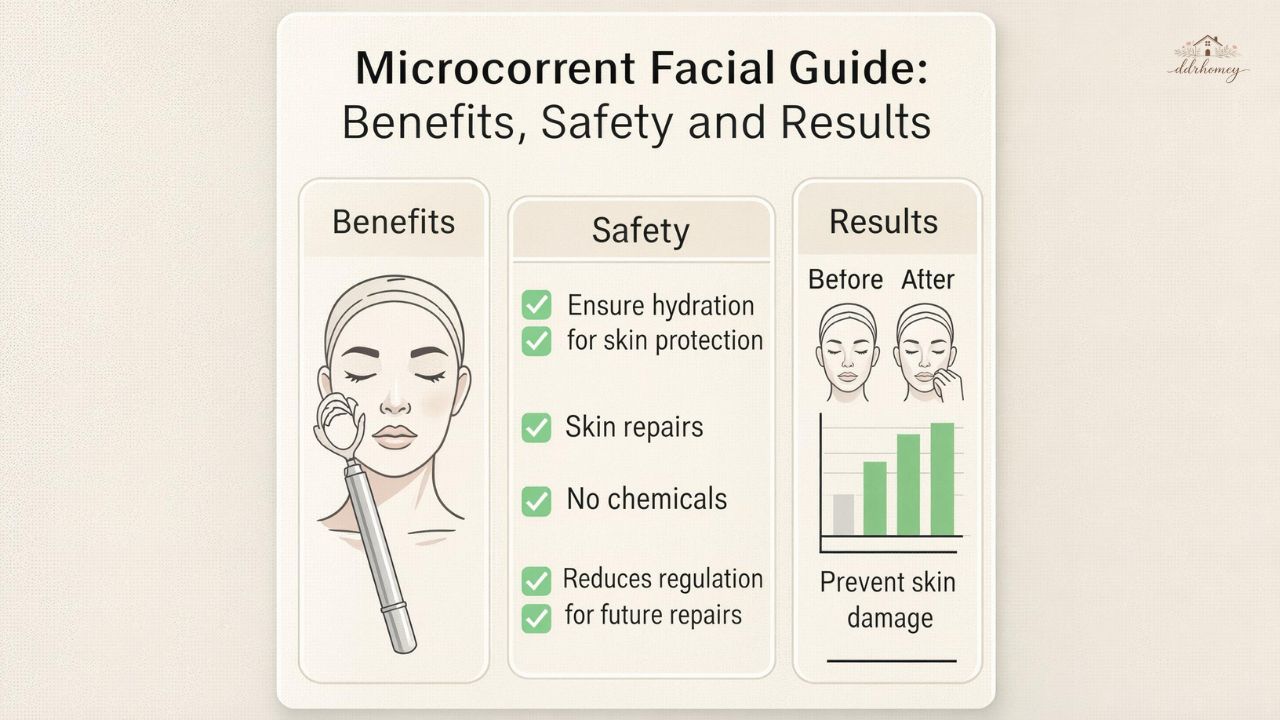
Infographic: Microcurrent Facial Safety Checklist with six points: healthy skin, no pacemaker, not pregnant unless medically cleared, enough conductive gel, follow device timing, stop if pain occurs.
Aftercare and Skincare Pairings
Aftercare is gentle. Your skin should not need a recovery period, but it may feel slightly warm, sensitive, or flushed.
Right After Treatment
Use simple skincare:
- Hydrating serum
- Barrier-supporting moisturizer
- Sunscreen during the day
- Gentle cleanser at night
Avoid strong scrubs, harsh acids, or aggressive retinoids right away if your skin feels sensitive.
Best Skincare Pairings
This treatment pairs nicely with barrier-friendly skincare. Think hyaluronic acid, glycerin, ceramides, niacinamide, peptides, and soothing moisturizers.
It also pairs well with daily sunscreen. No facial device can outwork unprotected sun exposure. If your goal is youthful-looking skin, sunscreen is still the boring hero that wins.
Treatments to Discuss First
Ask a professional before combining it closely with:
- Chemical peels
- Microneedling
- Laser treatments
- Injectables
- Strong retinoid routines
- Active acne treatment
- Prescription skin medication
Timing matters. Your skin may tolerate several treatments, but stacking too much at once can cause irritation.
How It Compares With Other Facial Treatments
A microcurrent facial sits in a specific lane. It is not the same as a hydrafacial, chemical peel, radiofrequency treatment, LED therapy, or facial massage.
Compared With Facial Massage
Massage can reduce puffiness and help the face look relaxed. Microcurrent adds electrical stimulation, which may create a stronger temporary toning effect for some people.
Compared With LED Therapy
LED therapy uses light wavelengths. It is often used for acne, redness, inflammation, or skin aging support, depending on the wavelength. Microcurrent uses electrical current and is mostly associated with facial toning.
Compared With Radiofrequency
Radiofrequency uses heat energy and is often aimed at collagen remodeling and skin tightening. Microcurrent is usually gentler and less heat-based.
Compared With Botox or Fillers
Botox relaxes targeted muscles. Fillers add volume. Microcurrent does neither. It may make the face look lifted or refreshed, but it does not work like injectables.
Compared With a Facelift
A facelift surgically repositions tissue and addresses significant laxity. Microcurrent is noninvasive and subtle. These are very different categories.
Common Mistakes to Avoid
Small mistakes can make the treatment less effective, uncomfortable, or unsafe.
Mistake 1: Expecting Permanent Results
The face changes daily because of sleep, salt, stress, hormones, age, hydration, and posture. A microcurrent facial may help the skin look refreshed, but it is not permanent.
Mistake 2: Using Too Little Gel
Dry skin plus electrical current feels unpleasant. Keep the skin slippery and reapply gel as needed.
Mistake 3: Moving Too Fast
Slow, controlled movements are usually better than rushing. Follow the device pattern carefully.
Mistake 4: Treating Irritated Skin
Do not use the device over cuts, rashes, active infections, or painful inflamed areas.
Mistake 5: Ignoring Contraindications
Electrical devices deserve respect. Pacemakers, seizure history, pregnancy, and implanted devices are not small details.
Mistake 6: Buying Only Because of Social Media
A viral video is not a safety review. Check the brand, instructions, clearance status where applicable, warranty, and user guidance.
Mistake 7: Skipping Sunscreen
If you invest in facial toning but skip sunscreen, you are working against your own skin goals.
Choosing a Provider or Device
A safe, pleasant experience starts before the treatment.
Choosing a Professional Provider
Look for:
- A licensed or properly trained provider
- Clear consultation process
- Clean treatment room
- Transparent pricing
- Honest expectations
- No pressure to buy packages immediately
- Willingness to discuss contraindications
- Proper hygiene between clients
A trustworthy provider will not promise a “non-surgical facelift” that lasts forever. They will explain that results are usually subtle, temporary, and improved with consistency.
Choosing an At-Home Device
Look for:
- Clear safety warnings
- Conductive gel instructions
- Device settings that are easy to understand
- FDA-cleared status where relevant
- Good customer support
- Replacement gel availability
- Realistic claims
- Comfortable shape and grip
Be careful with products that promise permanent lifting, instant wrinkle removal, or medical results without evidence.
Side Effects and Safety Notes
Most people describe the treatment as comfortable, but side effects can happen. MedicalNewsToday lists reported effects such as tingling, discomfort, irritation, dryness, drowsiness, dizziness, and facial twitching, and advises consulting a doctor if side effects are severe or do not improve.
Stop treatment if you feel sharp pain, burning, unusual dizziness, strong twitching, or skin irritation that does not settle. More intensity does not mean better results.
If you have a medical condition, take prescription skin medication, or recently had cosmetic procedures, ask a qualified professional before booking.
FAQs
Does a microcurrent facial really work?
It may work for subtle, temporary lifting, facial toning, and a refreshed appearance, especially with consistent use. The evidence is not strong enough to promise dramatic or permanent anti-aging results.
How long do results last?
Some people notice results for a day or several days after one session. With a series, results may appear more consistent, but maintenance is usually needed.
Is it painful?
Most people describe it as mild tingling or a strange but tolerable sensation. If it hurts, the setting may be too high, the gel may be drying, or the device may not suit your skin.
Can I use it at home?
Yes, many people use at-home devices. Choose a reputable device, read the instructions, use enough conductive gel, and avoid treatment if you have contraindications.
Can it replace Botox?
No. Botox and microcurrent work differently. Botox relaxes specific muscles, while microcurrent uses low-level current for cosmetic facial stimulation and toning.
Is it safe during pregnancy?
Many clinics recommend avoiding it during pregnancy because safety for the fetus is not well established. Ask your doctor before considering any electrical facial device.
Can I use it after filler or Botox?
Ask your injector or dermatologist. Timing depends on the treatment area, product used, and your personal plan.
How often should I do it?
Follow your provider or device instructions. Many routines start more frequently and then move to maintenance, but overuse can irritate the skin.
Do I need conductive gel?
Yes. Conductive gel helps the current move evenly and keeps the device comfortable on the skin.
Who should not use it?
People with pacemakers, implanted electrical devices, seizure disorders, pregnancy, open wounds, active infection, or certain medical concerns should avoid it or get medical clearance first.
Conclusion
A microcurrent facial can be a lovely choice if you want a subtle, refreshed look without needles or downtime. It may help the face look more lifted, awake, and less puffy, especially when used consistently and safely.
The honest truth is that it is not magic. It will not erase aging, replace medical treatments, or permanently sculpt your face. Its strength is softer than that: a gentle, polished effect that can fit nicely into a thoughtful skincare routine.
Choose a qualified provider or a reputable at-home device, respect safety warnings, use enough conductive gel, and keep your expectations realistic. When approached with care, this treatment can feel less like chasing perfection and more like giving your skin a calm, confident little boost.