Introduction
A fireplace can change the whole mood of a home before anyone says a word. When you search for custom fireplace near me, you are usually not just looking for heat. You are looking for a focal point, a cozier room, and a feature that feels made for your space.
The right fireplace can make a plain wall feel intentional. It can turn a cold living room into the place everyone drifts toward. It can even shape how guests remember your home.
But a fireplace is not like buying a lamp or a coffee table. It involves design, ventilation, fuel type, clearances, permits, installation quality, and long-term maintenance. That is why choosing the right local fireplace contractor matters as much as choosing the style.
In this guide, we will walk through custom fireplace types, materials, cost factors, safety points, design ideas, and smart questions to ask before hiring anyone.

Table of Contents
- What Is a Custom Fireplace?
- Why Local Fireplace Experts Matter
- Popular Custom Fireplace Types
- Best Materials for Fireplace Design
- How to Choose a Custom Fireplace Near Me
- Indoor Fireplace Design Ideas
- Outdoor Custom Fireplace Ideas
- Cost Factors and Budget Planning
- Safety, Codes, and Ventilation
- Common Mistakes to Avoid
- Maintenance and Long-Term Care
- FAQs
- Conclusion
What Is a Custom Fireplace?
A custom fireplace is a fireplace designed around your room, layout, fuel preference, architectural style, and personal taste. It may be built from scratch, added during a remodel, or created by upgrading an existing firebox, mantel, surround, hearth, or chimney system.
A custom fireplace can be modern, traditional, rustic, transitional, coastal, farmhouse, luxury, or minimalist. It may use gas, electric, wood, ethanol, or a fireplace insert. It may include stone, tile, marble, brick, plaster, concrete, metal, wood accents, or built-in shelving.
Definition: Custom Fireplace
A custom fireplace is a made-to-fit fireplace feature that is planned for a specific home instead of being treated as a one-size-fits-all unit. The design can include the firebox, surround, mantel, hearth, wall treatment, built-ins, lighting, and venting needs.
The biggest benefit is control. You can choose proportions that fit the room, materials that match the home, and a layout that works with furniture, windows, ceiling height, and traffic flow.
A standard fireplace may look fine. A custom one looks like it belongs there.
Why Local Fireplace Experts Matter
When someone searches custom fireplace near me, the “near me” part matters more than many people realize. Fireplace work is local by nature because codes, climate, permits, fuel availability, home age, and inspection rules can vary by area.
A fireplace contractor in your region understands common house styles, local building departments, weather conditions, gas line practices, chimney issues, and neighborhood design preferences.
Local Code Knowledge
Fireplaces must be installed with proper clearance from combustible materials. NFPA 211 is a major standard focused on reducing fire hazards through safe installation of chimneys, fireplaces, vents, and solid fuel-burning appliances.
A local professional should understand how these standards connect with your city or county rules. They should also know when permits, inspections, gas line approvals, or chimney evaluations are needed.
Better Material Guidance
A contractor who works in your area can guide you toward materials that hold up well in local humidity, freeze-thaw cycles, dry heat, coastal air, or heavy seasonal use.
For example, a stone surround that works beautifully in a dry climate may need different sealing and care in a damp region. An outdoor fireplace in a snowy area needs more planning than one in a mild climate.
Realistic Project Planning
A nearby specialist can visit your home, inspect the wall or existing fireplace, check access, discuss venting, and catch issues that photos cannot show. That in-person review can prevent expensive surprises later.
Popular Custom Fireplace Types
The best fireplace type depends on how you want to use it. Some people want real heat. Others want ambiance. Some want a dramatic living room wall. Others want a low-maintenance feature that works with a remote.
Gas Fireplaces
Gas fireplaces are popular because they are convenient. Many turn on with a switch or remote, and they provide steady heat without carrying wood or cleaning ash.
They work well in family rooms, primary bedrooms, basements, and open-plan spaces. Direct-vent gas fireplaces are common because they vent to the outside and do not rely on an existing masonry chimney.
Gas is a strong option if you want:
- Reliable heat
- Easy operation
- Clean-looking flames
- Less mess than wood
- A polished built-in look
The main concern is installation. Gas lines, venting, clearances, and manufacturer instructions must be followed carefully.
Electric Fireplaces
Electric fireplaces are often the easiest to add. They do not produce real flames, so they usually have fewer venting demands. Many homeowners choose electric units for condos, apartments, bedrooms, offices, media walls, and simple remodels.
Some modern electric fireplaces look surprisingly realistic, especially linear models with adjustable flame color, ember effects, and heater settings.
Electric is a good choice if you want:
- Low installation complexity
- No chimney
- Remote control operation
- Media wall compatibility
- Flexible placement
It may not feel as authentic as gas or wood, but it can be practical and beautiful.
Wood-Burning Fireplaces
Wood-burning fireplaces have a romance that is hard to copy. The sound, smell, and real flame feel nostalgic and comforting.
However, wood fireplaces need more maintenance and safety attention. The EPA notes that wood smoke can irritate the lungs, cause inflammation, affect the immune system, and increase vulnerability to lung infections.
Wood burning also produces fine particles that can enter the lungs and worsen respiratory and heart conditions, according to the EPA’s indoor air information on residential wood smoke.
Wood is best for people who love the ritual and are willing to maintain the chimney, use seasoned wood, manage smoke, and follow safety rules.
Fireplace Inserts
A fireplace insert is installed inside an existing fireplace opening. Inserts can be gas, electric, or wood-burning. They are often used to upgrade an older masonry fireplace that looks dated or performs poorly.
Angi’s 2026 data places fireplace insert installation between about $700 and $6,500, depending on type, labor, lines, and firebox repair needs.
Inserts are useful when you like the location of your current fireplace but want better performance, cleaner styling, or easier use.
Outdoor Fireplaces
Outdoor fireplaces create a strong backyard focal point. They can define a patio, extend outdoor living into cooler evenings, and make a yard feel more luxurious.
They may be built with stone, brick, concrete block, stucco, tile, or metal firebox systems. Some are wood-burning, while others use gas.
Outdoor fireplaces need careful planning for wind, smoke direction, seating distance, drainage, local fire rules, and weather-resistant materials.
Best Materials for Fireplace Design
Materials decide whether the fireplace feels sleek, warm, rustic, bold, or timeless. They also affect cost, cleaning, and durability.
Natural Stone
Natural stone feels substantial and grounded. Limestone, marble, granite, slate, travertine, quartzite, and fieldstone all create different moods.
A tall stone fireplace can make a living room feel grand. A smooth limestone surround can feel soft and refined. A stacked stone fireplace can feel rustic and cozy.
Stone is often a higher-cost choice. Angi’s 2026 stone fireplace cost guide places stone fireplace installation around $4,000 to $15,000, with many homeowners spending near $8,000 depending on size and stone type.
Brick
Brick is warm, familiar, and durable. Red brick feels classic. Whitewashed brick feels relaxed. Thin brick veneer can give an older look without the weight of full masonry.
Brick works well in farmhouse, cottage, traditional, industrial, and transitional homes.
Tile
Tile gives huge design freedom. You can use handmade ceramic, porcelain slab, zellige-style tile, encaustic patterns, marble mosaic, or simple subway tile.
Tile is especially useful when you want color, texture, or a cleaner modern face.
Plaster and Concrete
Plaster and concrete fireplaces feel smooth and architectural. They are often used in minimalist, Mediterranean, desert-modern, and contemporary interiors.
A plaster fireplace can look soft and handmade. A concrete fireplace can look bold and industrial. Both need skilled application so the surface looks intentional rather than unfinished.
Metal
Metal surrounds can look modern, dramatic, and sharp. Black steel, brass, bronze, and stainless steel can all work depending on the home.
Metal is often used as a detail rather than the full fireplace face. For example, a black steel trim around a gas firebox can make the opening look cleaner.
Wood Mantels
Wood adds warmth above stone, tile, brick, or plaster. Oak, walnut, reclaimed beams, and painted wood mantels all create different effects.
Just remember that combustible mantels must follow clearance rules. A beautiful mantel is not worth a safety problem.
How to Choose a Custom Fireplace Near Me
Choosing the right provider is part design decision, part safety decision, and part trust decision. The best custom fireplace near me should be able to talk about style and code in the same conversation.
Review Their Real Project Photos
Look for completed projects, not only manufacturer images. Real photos show how the company handles proportions, seams, mantels, hearths, tile edges, stone corners, and built-ins.
Ask to see work similar to your project:
- Modern linear fireplace
- Traditional mantel fireplace
- Outdoor stone fireplace
- Fireplace insert upgrade
- Media wall fireplace
- Full-height feature wall
Ask About Licensing and Insurance
Fireplace work can involve gas, electrical, masonry, framing, venting, and finish carpentry. A serious contractor should be properly licensed where required and carry insurance.
Do not feel awkward asking. A good company expects those questions.
Discuss Permits Early
Permits are not just paperwork. They protect you when work affects safety systems, fuel lines, electrical connections, structural framing, or exterior venting.
A contractor who says permits are “never needed” without looking at the job should make you cautious.
Compare More Than Price
A low quote can become expensive if it skips ventilation, uses poor materials, ignores clearances, or leaves finishing details unfinished.
Compare:
- Scope of work
- Materials included
- Appliance or firebox model
- Venting details
- Permit responsibility
- Timeline
- Warranty
- Cleanup
- Finish work
- Exclusions
When searching custom fireplace near me, the goal is not the cheapest quote. The goal is the safest, cleanest, best-fit result for your home.
Indoor Fireplace Design Ideas
A fireplace should match how the room is used. A family room needs comfort. A formal living room may need symmetry. A bedroom fireplace should feel soft and calm. A basement fireplace may need brightness and warmth.
Modern Linear Fireplace
A linear fireplace has a wide, horizontal flame area. It looks sleek and works well under a TV, inside a media wall, or across a feature wall.
Use large-format tile, plaster, slab stone, or smooth concrete around it. Keep the mantel simple or skip it entirely for a cleaner look.
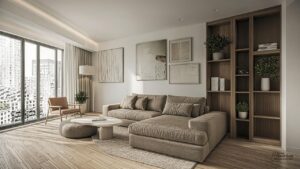
Image 2: Modern living room with a long linear gas fireplace, plaster surround, floating wood shelves, hidden lighting, and neutral furniture.
Traditional Mantel Fireplace
A traditional mantel can still feel fresh. Choose clean molding, balanced proportions, and a simple stone or tile surround.
This works well in colonial, craftsman, transitional, and classic homes. Pair it with built-in shelves or symmetrical sconces for a polished look.
Floor-to-Ceiling Feature Wall
A full-height fireplace makes the ceiling feel taller and gives the room a strong focal point. It works especially well in rooms with vaulted ceilings or open living areas.
Use stone, brick, plaster, tile, or wood paneling. Keep nearby decor minimal so the fireplace can breathe.
Corner Fireplace
Corner fireplaces can be tricky, but they can work beautifully in small rooms or awkward layouts. Use a simple surround and avoid oversized mantels that crowd the walls.
Arrange furniture so the fireplace feels included, not stranded.
Fireplace with Built-Ins
Built-ins make a fireplace wall feel complete. Shelves, cabinets, hidden storage, lighting, and display niches can turn a plain wall into a practical centerpiece.
This is ideal for families who need storage for books, games, media equipment, blankets, or decor.
Outdoor Custom Fireplace Ideas
An outdoor fireplace should feel like an anchor. It gives the patio a reason to exist and creates a natural gathering point.
Stone Patio Fireplace
A stone fireplace beside a paver patio feels timeless. Add lounge chairs, outdoor cushions, low lighting, and plants to soften the masonry.
Outdoor Kitchen Fireplace
If you already have a grill or outdoor kitchen, a fireplace can complete the entertaining zone. Keep smoke direction, food prep space, and seating distance in mind.
Poolside Fireplace
A fireplace near a pool can look resort-like. Use materials that handle moisture well and choose seating that can tolerate wet swimsuits and outdoor weather.
Covered Patio Fireplace
A covered patio fireplace needs careful ventilation and clearance planning. This is not a place for guessing. Work with qualified professionals and follow local rules.
Angi’s 2026 outdoor fireplace data lists installation costs from about $800 to $21,000, with an average around $3,000, depending on materials, size, site preparation, and permits.
Cost Factors and Budget Planning
A fireplace project can be modest or very high-end. The final cost depends on the unit, materials, installation complexity, fuel type, finish work, and local labor.
Angi’s 2026 fireplace installation data places professional installation commonly between $941 and $4,210, though custom surrounds, venting, chimney repair, and higher-end work can push totals higher.
Main Cost Factors
- Fireplace type
- Gas, electric, wood, or insert system
- New installation vs. remodel
- Venting or chimney needs
- Stone, tile, brick, plaster, or slab material
- Mantel design
- Hearth size
- Built-in cabinetry
- Electrical work
- Gas line work
- Permits and inspections
- Demolition and disposal
- Wall repair and painting
Budget-Friendly Options
Electric fireplaces, simple tile surrounds, painted mantels, and insert upgrades can be more budget-friendly than full masonry builds.
You can also create a custom look without rebuilding everything. For example, keep the existing firebox and update the surround, mantel, hearth, and wall color.
Mid-Range Options
A mid-range project might include a gas insert, new surround tile, custom mantel, basic built-ins, and fresh wall finishing.
This is where many homeowners get the best mix of beauty, comfort, and practicality.
High-End Options
High-end projects may include slab stone, full-height masonry, custom metalwork, hidden ventilation details, premium gas units, outdoor fireplaces, and built-in storage walls.
These projects need strong planning because small measurement errors can be expensive.
| Project Type | Typical Scope | Best For |
|---|---|---|
| Light refresh | Paint, mantel, tile, minor repairs | Updating an older fireplace |
| Insert upgrade | Gas, electric, or wood insert | Better use of existing fireplace |
| Full remodel | New surround, mantel, hearth, finish wall | Strong visual transformation |
| Custom build | New firebox, venting, masonry, built-ins | Major renovation or new construction |
| Outdoor fireplace | Patio feature, masonry, gas or wood | Backyard living spaces |
Safety, Codes, and Ventilation
This is the section that should never be skipped. Fireplaces are beautiful, but they involve heat, flame, combustion, electricity, gas, and building materials.
Clearance from Combustibles
Combustible materials include wood mantels, trim, framing, shelves, and some decorative finishes. These materials must be kept at safe distances from fireplace openings, fireboxes, and venting systems.
Factory-built fireplaces may have specific manufacturer instructions. Masonry fireplaces may follow code-based clearance rules. A professional should verify the correct requirement for your exact fireplace type.
Venting
Gas and wood fireplaces need proper venting. Poor venting can lead to smoke, moisture, carbon monoxide risk, poor performance, and dangerous operation.
Electric fireplaces usually do not need combustion venting, but they still need proper electrical installation.
Wood Smoke Concerns
Wood smoke is not just a smell. The EPA says the biggest health threat from residential wood smoke comes from fine particles that can enter the lungs and contribute to respiratory and heart-related health problems.
If someone in your home has asthma, COPD, heart disease, allergies, or frequent respiratory issues, discuss fuel choices carefully.
Inspection and Maintenance
NFPA 211 addresses fireplaces, chimneys, vents, and solid fuel-burning appliances, including installation and inspection.
For homeowners, the simple takeaway is this: fireplaces should not be treated as set-and-forget decor. They need proper installation and periodic inspection.
Carbon Monoxide Safety
Any fuel-burning appliance should be paired with working carbon monoxide alarms. This includes gas and wood-burning fireplaces.
Place alarms according to local code and manufacturer instructions. Replace batteries and expired devices on schedule.
Common Mistakes to Avoid
A fireplace mistake can be expensive, frustrating, or unsafe. Take your time before approving the design.
Choosing Style Before Function
A fireplace should look good, but it also needs to suit the room. A huge fireplace in a tiny room can feel overpowering. A tiny insert on a large wall can feel lost.
Ignoring Furniture Layout
Think about where people will sit. A fireplace that looks centered on the wall may still be awkward if it fights the sofa, TV, windows, or walkway.
Placing a TV Too High
A TV above the fireplace can work, but it often ends up too high. Consider heat, viewing angle, mantel depth, and cable management.
Skipping Venting Details
Do not assume every fireplace can go anywhere. Venting routes, exterior walls, rooflines, chimneys, and gas lines all affect placement.
Overdecorating the Surround
Too many materials can make the fireplace feel busy. Stone, tile, wood, metal, heavy mantel decor, patterned wallpaper, and bright art can compete with each other.
Hiring Without Checking Experience
A general handyman may be fine for simple cosmetic work, but fireplace installation needs the right skill set. Gas, venting, masonry, and electrical work should be handled by qualified professionals.
Forgetting the Rest of the Room
The fireplace should match the room’s flooring, trim, wall color, lighting, furniture, and overall style. A custom fireplace near me should feel custom to the whole home, not only the firebox wall.
Maintenance and Long-Term Care
A custom fireplace is an investment. Good maintenance keeps it safe and beautiful.
Gas Fireplace Care
Schedule periodic service according to manufacturer guidance. Clean glass carefully, check the pilot or ignition system, and watch for unusual smells, soot, or flame changes.
Electric Fireplace Care
Dust vents, clean the glass, inspect cords or wiring if accessible, and avoid blocking airflow. Electric units are usually lower maintenance, but they still need basic care.
Wood Fireplace Care
Use seasoned wood, avoid burning trash or treated wood, and have the chimney inspected and cleaned when needed. Watch for creosote buildup, smoke backup, and draft problems.
Stone and Tile Care
Use cleaners safe for the material. Natural stone may need sealing. Avoid acidic cleaners on marble or limestone.
Mantel and Decor Safety
Keep candles, garlands, paper, dried flowers, and fabric away from heat. Holiday decor looks charming, but it can become dangerous if placed too close.
FAQs
How do I find the best custom fireplace near me?
Look for local fireplace companies with real project photos, proper licensing where required, insurance, strong reviews, clear estimates, and experience with your fireplace type. Ask about permits, venting, clearances, warranties, and cleanup before signing.
Is a custom fireplace worth it?
Yes, it can be worth it if you want a focal point that fits your home, improves comfort, and feels more intentional than a standard unit. The value depends on design quality, safety, materials, and how often you use the space.
What is the cheapest type of custom fireplace?
Electric fireplaces are often the most budget-friendly because they usually need less venting work. A simple insert or cosmetic surround update can also cost less than building a new masonry fireplace.
What type of fireplace is best for heat?
Gas inserts and efficient wood-burning inserts often provide stronger practical heat than traditional open fireplaces. Electric fireplaces can help warm smaller zones, but output varies by model.
Can I add a fireplace to a house that does not have one?
Yes, in many homes. Electric fireplaces are usually the easiest to add. Gas fireplaces may be possible with proper venting and gas access. Wood-burning fireplaces are more complex and may require a chimney or approved venting system.
How long does fireplace installation take?
A simple electric fireplace may take a short time once materials are ready. A gas fireplace, insert, custom surround, or outdoor masonry fireplace can take longer because of permits, inspections, venting, and finish work.
What materials look best for a modern fireplace?
Large-format tile, smooth plaster, slab stone, black metal trim, concrete, and simple wood mantels work well for modern fireplaces. Keep lines clean and avoid heavy ornamentation.
Is a wood-burning fireplace safe?
It can be safe when properly installed, inspected, vented, and maintained. However, wood smoke and chimney buildup are real concerns, so regular care and safe burning practices matter.
Can I put a TV above a fireplace?
Yes, but it needs planning. Check heat exposure, viewing height, mantel depth, wall structure, and cable routing. Some rooms work better with the TV beside the fireplace instead.
Do I need a permit for a custom fireplace?
Often, yes, especially for gas, wood-burning, venting, chimney, electrical, or structural work. Permit rules vary by location, so ask your local contractor and building department.
Conclusion
A fireplace is one of those home features that feels emotional and practical at the same time. It gives warmth, creates a focal point, and makes ordinary evenings feel a little more special.
When you search custom fireplace near me, look beyond the first pretty photo or lowest quote. The best choice is a local expert who understands design, safety, venting, clearances, permits, and the way your home actually functions.
A well-planned fireplace should feel natural in the room, safe to use, easy to maintain, and beautiful for years. Whether you choose gas, electric, wood, stone, tile, plaster, or a full outdoor feature, the goal is the same: a fireplace that does not just fill a wall, but brings the home to life.