Introduction
A dining room should never feel like a space you only enter when guests arrive. The best eclectic dining rooms feel alive, layered, slightly surprising, and deeply personal, as if every chair, artwork, candleholder, and old cabinet has a story to tell.
That is the beauty of eclectic style. It gives you permission to mix eras, colors, textures, patterns, heirlooms, travel finds, modern pieces, and vintage objects without making the room feel random.
This matters because dining spaces are emotional rooms. They hold birthdays, everyday dinners, awkward first conversations, holiday meals, late-night tea, homework piles, and laughter that lingers after the plates are cleared. Houzz describes dining rooms as spaces for hosting and gathering, and it encourages homeowners to think carefully about layout, entertaining habits, furniture, lighting, accents, and storage before designing one.
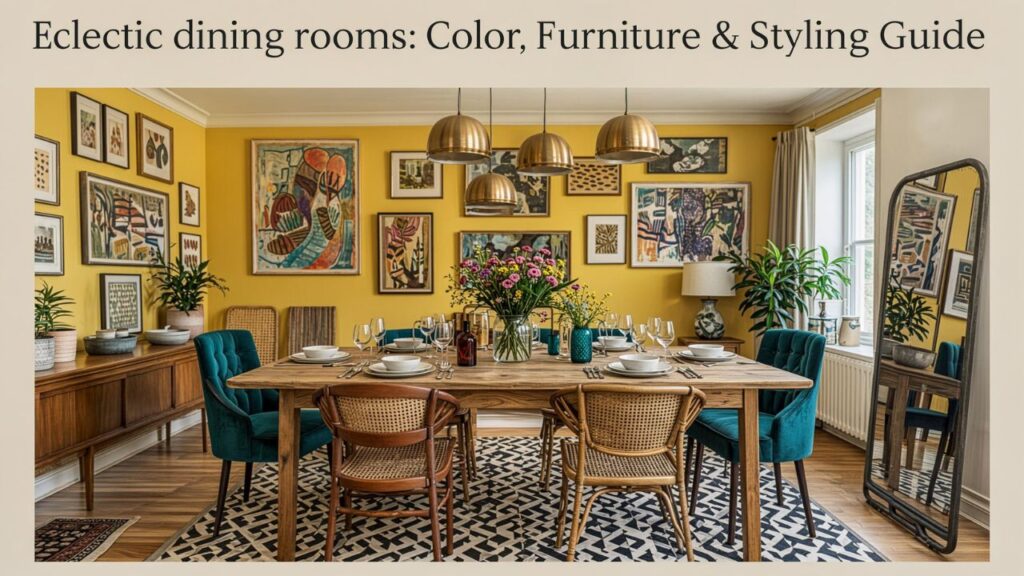
The trick is making the mix feel intentional. Eclectic does not mean “anything goes.” It means different things belong together because color, scale, mood, shape, or material quietly connects them.
Whether you want a modern eclectic dining room, a vintage-inspired space, or a colorful eclectic dining room filled with art and personality, this guide will help you create a room that feels collected, comfortable, and beautifully balanced.
Table of Contents
- What Makes eclectic dining rooms Work?
- Why Layered Dining Spaces Feel So Personal
- Choosing Furniture That Looks Collected
- Color, Pattern, Art, and Texture
- Lighting, Rugs, Storage, and Table Styling
- Small Dining Rooms and Open-Plan Spaces
- Modern Eclectic Dining Room Ideas
- Budget, Cost, and Financial Planning
- The Design Journey Behind Eclectic Dining Style
- Common Mistakes to Avoid
- A Real-Life Eclectic Dining Room Example
- FAQs
- Conclusion
What Makes eclectic dining rooms Work?
eclectic dining rooms combine furniture, colors, objects, patterns, art, and materials from different styles or periods while using shared design elements to create a room that feels personal, balanced, and visually connected.
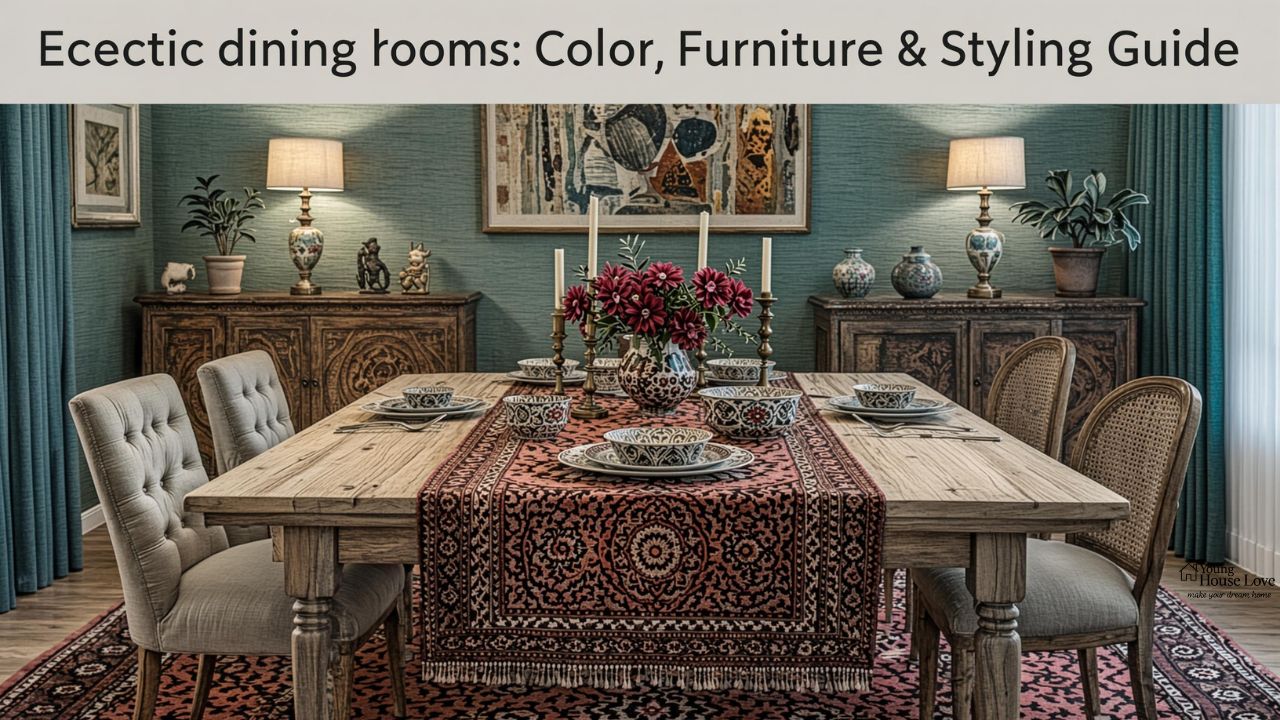
The key word is connected. A dining room can mix a farmhouse table, velvet chairs, a Moroccan rug, modern lighting, antique china, and contemporary art, but something has to pull it together. That “something” may be a repeated color, a consistent wood tone, a similar metal finish, a limited palette, or one strong focal point.
A room becomes chaotic when every piece tries to be the star. A room becomes eclectic when each piece has personality but still respects the others.
Eclectic is not the same as cluttered
Many people confuse eclectic style with clutter. They keep adding more because the room still does not feel finished. More chairs. More art. More plants. More candles. More shelves. More patterns.
In reality, eclectic dining room design needs editing more than most styles. Since the pieces are already varied, the room needs breathing space. A blank wall can make a gallery wall stronger. A simple table can make colorful chairs feel exciting. A quiet rug can let bold artwork lead the room.
Think of it like a dinner party. A room full of interesting guests is wonderful. A room where everyone talks at once is exhausting.
The core rules behind the freedom
Even expressive rooms usually follow a few quiet rules:
- Repeat at least one color three times.
- Mix old and new, but keep proportions balanced.
- Use one dominant wood tone or repeat several wood tones intentionally.
- Let one feature lead: lighting, art, rug, table, or wall color.
- Vary texture instead of relying only on color.
- Keep the table area functional, not just decorative.
- Leave enough space for chairs to move comfortably.
These rules do not limit creativity. They protect it.
Why Layered Dining Spaces Feel So Personal
A dining room is one of the easiest places to tell your story. It does not need the practical complexity of a kitchen or the daily softness of a bedroom. It can be bolder, moodier, stranger, or more sentimental than other rooms.
Dining rooms can be casual, formal, open-plan, connected to kitchens and living spaces, or reserved for special entertaining. That flexibility is why eclectic style works so well here. A dining room can handle a painted ceiling, mismatched seating, patterned wallpaper, a vintage sideboard, a dramatic chandelier, collected ceramics, family portraits, or a rug that would feel too loud elsewhere.
The emotional pull of collected design
A matched dining set can look polished, but it may not feel memorable. A collected room has more tension. It says, “Someone lives here. Someone chose this. Someone kept that chair because it mattered.”
Maybe the table came from your grandparents. Maybe the chairs were found one by one. Maybe the artwork came from a street market. Maybe the sideboard is new, but the brass candlesticks are old. That mix creates warmth because it feels built over time.
That is why many homeowners search for eclectic dining room ideas when they want a space that feels less like a catalog and more like a life.
Current design trends support personality
Recent interior trends continue to favor character, warmth, expressive color, handmade details, rich textures, and rooms that feel personal rather than sterile.
That does not mean every dining room needs to become maximalist. It means the appetite for rooms with story, mood, and individuality is strong. A clean room can still be eclectic. A quiet room can still have soul. The goal is not more stuff; it is more meaning.
Choosing Furniture That Looks Collected
Furniture is the backbone of an eclectic dining room. If the table, chairs, storage, and lighting are wrong, accessories cannot save the space.
The dining table should usually be the anchor. It is the piece people gather around, touch, use, and remember. In many homes, it is also one of the longest-lasting furniture investments.
Choosing the table
The table sets the room’s tone. A rustic table can feel warm and casual. A glass table can feel light and modern. A marble table can bring polish. A black wood table can create drama.
| Table Type | Best For | Eclectic Pairing Idea |
|---|---|---|
| Rustic wood table | Warm, casual rooms | Pair with modern chairs and abstract art |
| Round pedestal table | Smaller or social spaces | Add vintage chairs and bold wallpaper |
| Marble table | Glamorous dining rooms | Soften with woven chairs or antique lighting |
| Glass table | Compact spaces | Ground with a patterned rug and sculptural chairs |
| Black wood table | Moody interiors | Add brass, velvet, ceramics, and warm lighting |
| Farmhouse table | Family dining | Mix with mid-century chairs and contemporary art |
A rustic table with rustic chairs can feel predictable. A rustic table with velvet chairs, a modern pendant, and graphic art suddenly feels alive.
Mixing dining chairs
Mismatched chairs are one of the clearest ways to create an eclectic look. But the mix should still feel deliberate.
Try these approaches:
- Same chair shape, different colors.
- Same color, different chair shapes.
- Matching side chairs with different host chairs.
- Vintage chairs around a modern table.
- Bench on one side, chairs on the other.
- Two end chairs in fabric, side chairs in wood.
Avoid using six completely unrelated chairs unless you have a strong eye for balance. A little repetition keeps the room from feeling like a storage corner.
Sideboards, cabinets, and storage
Dining room storage is both practical and decorative. A sideboard can hold dishes, linens, candles, serving pieces, bar tools, games, or seasonal tableware.
In an eclectic room, storage pieces are a great place to add character:
- Antique sideboard with modern art above it.
- Painted cabinet in deep green, navy, or oxblood.
- Cane-front buffet with brass pulls.
- Vintage glass cabinet filled with colorful dishes.
- Low modern console under a gallery wall.
- Reclaimed wood cabinet in a clean white room.
The storage piece can be quieter than the table or more dramatic, depending on what the room needs.
Color, Pattern, Art, and Texture
Color is where eclectic dining rooms can really sing. The palette can be earthy, jewel-toned, pastel, moody, tropical, neutral, or wildly expressive. What matters is control.
Start with a base. Maybe the room is mostly cream, walnut, and black. Maybe it is teal, rust, and brass. Maybe it is sage, clay, and ivory. Once the base exists, you can add surprises without losing the thread.
Color palettes that work
| Palette | Feeling | Good Pairings |
|---|---|---|
| Terracotta, cream, olive | Warm and earthy | Wood table, linen shades, clay pots |
| Navy, mustard, walnut | Rich and confident | Velvet chairs, brass lights, vintage art |
| Blush, burgundy, black | Romantic and moody | Dark table, floral art, smoky glass |
| Emerald, cream, gold | Dramatic and elegant | Marble, brass, dark wood |
| Charcoal, rust, natural oak | Modern rustic | Woven seats, black lighting, abstract art |
| White, cobalt, rattan | Fresh and global | Patterned ceramics, cane chairs, blue art |
A colorful eclectic dining room does not need every color in the rainbow. It only needs a strong palette, repeated thoughtfully.
Pattern mixing without panic
Pattern makes a dining room feel layered. It can show up in rugs, curtains, wallpaper, chair fabric, art, plates, lampshades, or table linens.
A simple formula:
- One large-scale pattern.
- One medium-scale pattern.
- One small-scale pattern.
- One solid texture to calm everything down.
For example, you might use a large floral wallpaper, striped curtains, small patterned seat cushions, and a solid wood table. The result feels layered rather than messy.
Art as the personality layer
Dining rooms are perfect for bold art because people sit and look around. Large art can create a focal point. A gallery wall can tell a story. Vintage portraits can add humor and mystery. Abstract pieces can modernize older furniture.
Good art ideas include:
- Oversized abstract painting.
- Salon-style gallery wall.
- Vintage oil portrait.
- Framed textiles.
- Black-and-white family photography.
- Ceramic wall plates.
- Travel prints.
- Handmade wall sculpture.
Hang art at a human height. Dining rooms are experienced while seated, so art hung too high can feel disconnected.
Texture makes the room feel finished
Texture is one of the easiest ways to make an eclectic space feel rich without making it messy. Try combining smooth, rough, shiny, matte, soft, and woven surfaces.
Good texture combinations include:
- Velvet chairs with a rustic wood table.
- Cane cabinet doors with glossy ceramic lamps.
- Linen curtains with a brass chandelier.
- A wool rug under a sleek marble table.
- Handmade pottery on a polished sideboard.
Texture gives the eye something to enjoy, even when the color palette is simple.
Lighting, Rugs, Storage, and Table Styling
Lighting is the jewelry of a dining room, but it also has a job. It should flatter faces, make food look appealing, and create atmosphere.
A statement pendant or chandelier can completely change the room. It can make a basic table feel special, connect different styles, and give the dining area a strong identity.
Choosing the right fixture
The light fixture can be modern, vintage, industrial, handmade, romantic, or playful. It does not have to match the table. In fact, contrast often works better.
Try these pairings:
- Modern globe chandelier over an antique table.
- Vintage brass pendant above a clean marble table.
- Woven rattan light in a colorful room.
- Black metal fixture in a farmhouse dining space.
- Murano-style glass chandelier in a casual room.
- Paper lantern over a dark wood table.
Scale matters. A tiny fixture over a large table looks lost. A giant chandelier in a small room can feel theatrical in a good way, but only if the ceiling height supports it.
Rugs that anchor the room
A rug helps define the dining area, especially in open-plan homes. It also adds softness and sound absorption.
Choose a rug large enough that chairs stay on it when pulled out. This is one of the most common dining room mistakes. A rug that is too small makes the whole space feel awkward.
Practical rug options include:
- Flatweave wool rug.
- Vintage Persian-style rug.
- Jute rug under a patterned smaller rug.
- Indoor-outdoor rug for messy households.
- Low-pile patterned rug to hide crumbs.
Avoid thick shag under a dining table. It traps food, catches chair legs, and turns cleaning into a chore.
Table styling that feels natural
The table should not look like a permanent photo shoot. It still needs to function.
Simple styling ideas include:
- One large bowl.
- Three candlesticks in different heights.
- A low vase with branches.
- A stack of handmade plates.
- A runner with ceramics.
- Seasonal fruit.
- A small sculpture.
- Fresh herbs in simple pots.
Keep centerpieces low enough for conversation. If guests have to lean sideways to talk, the styling is working against the room.
Small Dining Rooms and Open-Plan Spaces
Small dining rooms can be incredibly charming because they allow bolder choices. A tiny room can handle wallpaper, dark paint, colorful chairs, or a dramatic pendant because the space already feels contained.
Small eclectic dining room ideas
For a small space, use:
- A round table for better flow.
- Armless chairs.
- Wall-mounted sconces.
- A mirror to bounce light.
- A built-in bench.
- A narrow sideboard.
- A light fixture with personality.
- Art that fills one wall.
- Curtains hung high.
- One strong rug.
The goal is not to make the room disappear. The goal is to make it feel intentional.
Open-plan dining areas
Open-plan dining areas need definition. Otherwise, the table floats between the kitchen and living room with no identity.
Use a rug, pendant light, wall color, art, or sideboard to mark the dining zone. Repeat colors from nearby rooms so the space feels connected, but give the dining area one special feature so it does not become invisible.
For example, if the living room has olive pillows and brass lamps, the dining area might use olive dining chairs and a brass pendant. The connection is subtle, but it works.
Apartment-friendly ideas
Renters can create an eclectic look without permanent changes:
- Use plug-in wall sconces.
- Add removable wallpaper.
- Use a thrifted cabinet as storage.
- Mix chairs from secondhand sources.
- Add a bold rug.
- Hang art with renter-safe methods.
- Use table linens for color.
- Add a sculptural lamp on a sideboard.
A rental dining corner can still feel soulful. Ownership is not required for personality.
Modern Eclectic Dining Room Ideas
A modern eclectic dining room blends clean lines with collected character. It is less crowded than traditional maximalism, but warmer and more personal than strict minimalism.
The modern side might come from a sleek table, simple chairs, sculptural lighting, clean walls, or contemporary art. The eclectic side might come from vintage ceramics, a patterned rug, mixed materials, handmade pieces, or one unexpected color.
How to create a modern eclectic look
To create a modern eclectic look, start with a clean foundation and add personality in layers.
Try this formula:
- Choose a simple table shape.
- Add chairs with texture or color.
- Use one bold light fixture.
- Bring in a vintage or handmade storage piece.
- Add art that contrasts with the furniture.
- Repeat one accent color at least three times.
- Keep the tabletop styling edited.
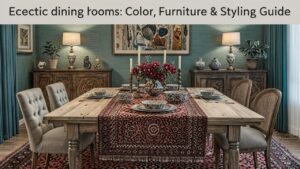
For example, a black pedestal table, cream boucle chairs, a vintage Persian rug, a sculptural pendant, and abstract art can feel modern, collected, and warm at the same time.
Modern eclectic dining room design mistakes to avoid
A modern eclectic space can fall flat if it becomes too controlled. If every piece is new and perfectly coordinated, the room may look like a showroom. Add at least one object with age, texture, or irregularity.
At the same time, avoid adding too many random accents. A modern eclectic dining room still needs restraint. The strongest rooms usually have a clear shape, a limited palette, and a few memorable pieces rather than dozens of competing details.
Budget, Cost, and Financial Planning
The cost of creating eclectic dining rooms varies widely because the style can include thrifted finds, heirlooms, custom upholstery, designer lighting, antique furniture, or budget-friendly DIY projects.
That is one reason eclectic style is so appealing. You do not need to buy a complete matching set. You can build the room slowly and mix investment pieces with affordable finds.
Budget levels
| Budget Level | What You Can Do |
|---|---|
| Low | Paint walls, thrift chairs, add art, use a vintage rug, style shelves |
| Medium | Buy a quality table, reupholster chairs, upgrade lighting, add curtains |
| High | Add a custom table, designer chairs, built-ins, wallpaper, or statement lighting |
| Flexible | Mix one splurge with secondhand and DIY pieces |
The smartest money usually goes into the table, lighting, and seating comfort. Accessories can be collected over time.
When to hire a designer or decorator
If the room feels stuck, a professional can help. You may not need full-service design. A one-time consultation can help with layout, colors, rug size, lighting scale, and what to keep or replace.
A designer can be especially useful when:
- The dining room connects to other rooms.
- You are mixing several styles and feel unsure.
- You need help choosing wallpaper, paint, or upholstery.
- You want custom built-ins or banquette seating.
- You are investing in expensive furniture.
- The room has awkward proportions.
Where to splurge and save
Splurge on:
- A sturdy table.
- Comfortable chairs.
- A properly scaled light fixture.
- A quality rug if it anchors the room.
- Curtains or shades if the windows are important.
Save on:
- Candlesticks.
- Art frames.
- Table linens.
- Vintage chairs that can be painted.
- Ceramics.
- Small shelves.
- Seasonal styling.
The eclectic approach works beautifully when one or two pieces feel special and the rest is gathered thoughtfully.
The Design Journey Behind Eclectic Dining Style
Because this topic is a design style rather than a public person, personal background and net worth do not apply in the usual biographical sense. There is no individual founder, celebrity profile, or verified personal wealth figure behind eclectic dining rooms.
What does apply is the style’s design journey. Eclectic interiors grew from collecting, travel, inherited objects, global influences, antique markets, artist homes, bohemian rooms, and the natural human desire to live with things that hold meaning.
How eclectic dining style evolved
The style has moved through several phases:
- Formal dining rooms with inherited furniture.
- Bohemian rooms full of textiles and art.
- Vintage-modern spaces mixing mid-century and antique pieces.
- Maximalist rooms with wallpaper, color, and pattern.
- Modern eclectic rooms with cleaner lines and curated contrast.
Its achievement is emotional. It lets a dining room become a personal archive instead of a catalog page.
Financial insights
Eclectic style can be financially smart because it does not require buying a complete matching set. You can build slowly. You can reupholster instead of replace. You can buy one vintage piece that changes the whole room.
However, it can also become expensive if every “unique” item is designer, imported, custom-framed, or antique. The best financial approach is simple: mix high and low. Let the room grow.
A collected dining room should feel like a life, not a receipt.
Common Mistakes to Avoid
The first mistake is having no anchor. An eclectic room still needs one dominant element, such as a table, chandelier, rug, artwork, or wall color.
The second mistake is using too many wood tones without intention. Wood can mix beautifully, but repeat each tone at least once so nothing looks accidental.
The third mistake is choosing uncomfortable chairs. A dining chair can be charming, but people still need to sit through dinner.
The fourth mistake is making every item “interesting.” If every piece is unusual, the room becomes tiring. Add simple pieces so the special ones can shine.
The fifth mistake is skipping lighting layers. One overhead light may not create enough mood. Add candles, sconces, lamps, or dimmers where possible.
The sixth mistake is ignoring scale. Oversized art can look amazing. Oversized chairs around a small table can ruin movement.
The seventh mistake is copying eclectic dining room ideas from photos without asking whether the choices fit your life. A room with pale upholstery, fragile antiques, and open shelving may not suit toddlers, pets, or everyday meals.
A Real-Life Eclectic Dining Room Example
Imagine a homeowner with a plain white dining room and a basic rectangular table. She wants the room to feel creative, so she buys colorful chairs, patterned curtains, a bright rug, three wall prints, and a gold chandelier all at once.
The result feels busy, not soulful.
Then she edits. She keeps the vintage rug, swaps two colorful chairs for simple wood ones, chooses one large painting instead of three small prints, adds a black sideboard, and repeats the rug’s rust tone in candles and napkins.
Suddenly the room feels collected rather than chaotic.
That is the secret. Eclectic style is not adding everything you like. It is choosing what belongs together.
FAQs
Are eclectic dining rooms still in style?
Yes. eclectic dining rooms remain stylish because rooms with personality, vintage pieces, expressive color, handmade details, and layered materials continue to feel warm and relevant.
What is an eclectic dining room?
An eclectic dining room is a dining space that mixes furniture, colors, art, textures, and decor from different styles or periods while using repeated design elements to keep the room cohesive.
How do I make an eclectic dining room look cohesive?
Repeat a few elements, such as color, wood tone, metal finish, shape, or texture. The room can mix styles, but it needs visual echoes so the pieces feel connected.
Can I use mismatched dining chairs?
Yes. Mismatched chairs are a classic eclectic move. For the best result, connect them through color, height, material, upholstery, or chair shape.
What colors work best for eclectic dining rooms?
Earth tones, jewel tones, warm neutrals, deep blues, olive, rust, burgundy, mustard, cream, black, and terracotta all work well. The best palette depends on the room’s light and existing furniture.
What kind of table should I choose?
Choose the table based on lifestyle first. A solid wood table is great for family meals, a round table supports conversation, and a marble or glass table can make the room feel more polished.
Is eclectic decor expensive?
It can be affordable because secondhand finds, inherited pieces, DIY art, and vintage furniture all work beautifully. The cost rises when you choose custom furniture, designer lighting, wallpaper, or professional styling.
What lighting works best over the table?
A statement pendant or chandelier usually works well. Choose a fixture that contrasts with the table but still relates to the room through color, shape, metal, or mood.
Can eclectic style work in a small dining room?
Absolutely. Small dining rooms can handle bold wallpaper, dark paint, dramatic lighting, and collected art because the space is contained. Just keep furniture scaled correctly.
How do I avoid making the room look messy?
Edit often. Remove pieces that do not serve the room. Keep the table usable, repeat key colors, balance bold items with quiet ones, and leave some negative space.
How do I create a colorful eclectic dining room?
Start with two or three main colors, then repeat them through chairs, artwork, rugs, table linens, or accessories. A colorful eclectic dining room works best when the palette feels intentional rather than random.
Conclusion
eclectic dining rooms work because they feel human. They allow a dining space to hold memory, color, humor, texture, travel, family, craft, and surprise without needing everything to match.
Start with one strong anchor: a table, rug, light fixture, wall color, or piece of art. Then build around it slowly. Mix eras, but repeat colors. Add pattern, but give the eye somewhere to rest. Keep the chairs comfortable. Let storage be beautiful and useful.
Most importantly, do not rush the room. The best eclectic spaces rarely look finished in one weekend. They grow through finds, experiments, edits, and moments of “I know exactly where this belongs.”
When the mix is right, the dining room stops being a formal space you avoid. It becomes a room with a pulse, a place where meals feel warmer, conversations last longer, and every object has a reason to stay.