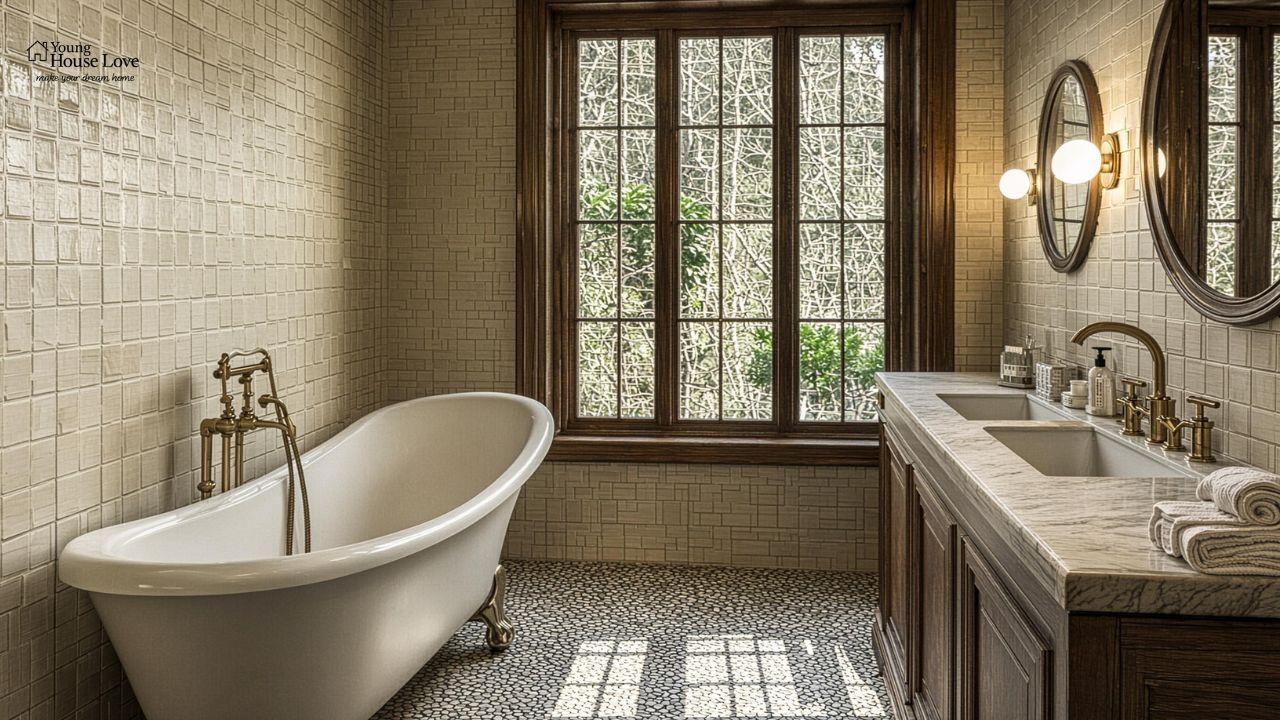
Introduction
Some bathrooms look new for a year, then suddenly feel dated. A craftsman bathroom feels different because it is built around warmth, honest materials, and details that look loved rather than mass-produced.
This style matters because bathrooms are no longer just quick-use rooms. They are morning reset spaces, evening wind-down spaces, and often one of the most valuable rooms to improve during a home remodel.
Image 1: Warm bathroom with dark wood vanity, handmade green wall tile, brass sconces, white sink, patterned floor tile, and simple craftsman trim.
The beauty of this look is that it does not chase perfection. It celebrates wood grain, handmade tile variation, sturdy cabinetry, soft lighting, and practical comfort. That is why it works so well in older bungalows, restored homes, and even newer houses that need more soul.
Craftsman homes became widely known in the early 1900s, and the style is tied to handcrafted details, natural materials, woodwork, and the Arts and Crafts movement. Houzz notes that handmade tile, dark stained wood, simple materials, Shaker-style cabinet doors, green tones, and minimal accessories are key bathroom elements in this design family.

Table of Contents
- What Makes a Craftsman Bathroom Special?
- Core Elements of a Craftsman Bathroom
- Best Colors for a Warm Craftsman Look
- Tile Ideas That Fit the Style
- Vanities, Cabinets, and Storage
- Fixtures, Lighting, and Hardware
- Layout Ideas for Small and Large Bathrooms
- Shower, Tub, and Wet Area Design
- Cost, Budget, and Remodel Planning
- Common Mistakes to Avoid
- Maintenance and Long-Term Care
- FAQs
- Conclusion
What Makes a Craftsman Bathroom Special?
A craftsman bathroom is rooted in the idea that useful things should also be beautiful. It is not flashy. It does not need shiny walls, oversized mirrors, or trendy shapes to feel impressive. Its strength comes from proportion, texture, and quality.
Definition: Craftsman Bathroom
A craftsman bathroom is a bathroom designed with natural materials, visible craftsmanship, warm wood tones, handmade or handmade-look tile, simple cabinetry, earthy colors, and functional details inspired by American Craftsman and Arts and Crafts design.
In plain words, it should feel grounded. A visitor should be able to walk in and feel that the vanity, trim, tile, mirror, and lighting were chosen with care.
This style usually avoids cold minimalism. It also avoids heavy ornament that belongs more to Victorian or formal traditional design. It sits somewhere warmer: practical, honest, cozy, and quietly detailed.
Why the Style Still Works
Many design trends depend on novelty. Craftsman design depends on materials. Wood, ceramic tile, stone, bronze, brass, glass, and painted trim do not really go out of style when they are used well.
That is why this bathroom style can work in a 1915 bungalow, a 1970s home being remodeled, or a new build that feels too plain. You are not trying to copy a museum room. You are borrowing the warmth and logic of the style.
Core Elements of a Craftsman Bathroom
A true craftsman bathroom is made of several small decisions working together. One wood vanity alone will not create the look. One green tile wall will not do it either. The feeling comes from layering the right elements.
Natural Wood
Wood is central to the style. Dark stained oak, walnut, cherry, fir, and quarter-sawn oak are classic choices. Lighter oak can work in a modern interpretation, but the grain should still feel visible.
Use wood in:
- Vanity cabinets
- Mirror frames
- Door trim
- Window casing
- Open shelves
- Medicine cabinets
- Built-in linen storage
Wood should look strong, not delicate. Flat panels, inset doors, Shaker-style fronts, and simple rails usually fit better than ornate carved details.
Handmade or Handmade-Look Tile
Tile is one of the easiest ways to bring character into the room. Craftsman bathrooms often use glazed ceramic tile, subway tile, square field tile, decorative accent tile, or small mosaic floor tile.
The tile does not need to be perfectly smooth. Slight color variation, uneven glaze, and soft edges can make the room feel more human.
Earthy Color Palette
This style loves colors borrowed from nature. Think moss green, olive, cream, clay, brown, amber, muted blue, slate, ivory, and warm gray.
These colors feel calm because they do not fight the wood. They support it.
Simple Strong Lines
Craftsman design is not fussy. Cabinet doors are often simple. Trim has weight. Mirrors may be framed. Fixtures feel solid. The overall effect is neat but not sterile.
Useful Built-Ins
Built-ins suit this style beautifully. A recessed medicine cabinet, linen niche, wood shelf, or small storage tower can make the bathroom more practical while keeping the handmade feeling.
Best Colors for a Warm Craftsman Look
Color can make or break the room. A craftsman-style bath should usually feel warm, calm, and slightly earthy. Bright white can work, but only when balanced with wood, tile, and softer accents.
Green
Green is probably the most natural color choice. Sage, moss, olive, eucalyptus, forest, and muted emerald all work. Houzz highlights green as a common Craftsman bathroom color, especially in tilework, because it pairs beautifully with dark wood.
Green tile behind a vanity can look rich without feeling loud. A sage wall above white wainscoting can feel soft and friendly. A deep green shower niche can add just enough drama.
Cream and Ivory
Creamy walls create warmth. They also help smaller rooms feel open. If your bathroom has dark wood trim, cream paint can keep it from feeling heavy.
Avoid cold blue-white paint unless you are creating a cleaner modern version. Warmer whites usually feel more natural.
Brown and Wood Tones
Brown shows up through wood, tile, bronze hardware, and stone. The trick is variation. Do not make everything the same brown. Mix dark wood with lighter tile, or medium wood with cream walls.
Muted Blue
A dusty blue or blue-gray can work well, especially with oak, white tile, and brushed nickel or antique brass. It gives a slightly cooler version of the style without losing softness.
Clay and Terracotta
Clay tones feel warm and handmade. They work especially well in floor tile, decorative tile borders, or small accent areas. Use them carefully, because too much orange can overpower the room.
| Color Family | Best Use | Mood |
|---|---|---|
| Sage green | Walls, tile, vanity accents | Calm and natural |
| Cream | Walls, trim, shower tile | Soft and classic |
| Deep brown | Vanity, trim, mirror frame | Warm and grounded |
| Muted blue | Walls, tile, decor | Quiet and fresh |
| Terracotta | Floor tile or accent tile | Earthy and handmade |
Tile Ideas That Fit the Style
Tile is where this design style becomes expressive. You can keep it simple or add a small artistic detail.
Subway Tile
Subway tile is a safe choice, but the finish matters. A handmade-look subway tile with slight waviness feels more suitable than a perfectly flat, glossy commercial tile.
Use white, cream, pale green, warm gray, or soft blue. A darker grout can create rhythm, but it may feel busy in a small bathroom.
Square Field Tile
Square tile feels very appropriate for Craftsman and Arts and Crafts spaces. A 4-by-4 or 6-by-6 ceramic tile can look charming around a shower, vanity wall, or wainscot.
A green square tile with a dark wood vanity is one of the most classic combinations.
Mosaic Floor Tile
Hex tile, basketweave tile, penny tile, and small square mosaic floors can all work. Black-and-white mosaic is classic, but warm gray, cream, or muted patterns may feel softer.
Choose slip-resistant tile for bathroom floors. Beauty matters, but safety matters every morning.
Decorative Accent Tile
Craftsman style allows decorative tile, but it should feel intentional. Use accent tile as a border, niche back, framed panel, or small backsplash detail.
Avoid scattering decorative pieces randomly. This style values rhythm and order.
Stone Tile
Slate, limestone, travertine, and marble can work if the finish feels natural. Highly polished stone may feel too formal unless the rest of the room is very refined.
Image 2: Craftsman shower with handmade green ceramic tile, cream mosaic floor, dark wood trim outside the wet area, and warm brass fixtures.
Vanities, Cabinets, and Storage
A vanity is often the visual anchor of the bathroom. In this style, it should feel more like furniture than a basic cabinet box.
Wood Vanity
A wood vanity is one of the strongest choices. Look for simple doors, solid proportions, visible grain, and a stain that works with the rest of the home.
Quarter-sawn oak is a classic choice because of its distinct grain. Walnut gives a richer look. Medium oak feels lighter and more casual.
Painted Vanity
A painted vanity can work if the color is earthy. Deep green, warm gray, navy, mushroom, and cream are all good options.
If you choose paint, add wood somewhere else, such as a mirror frame, shelf, door trim, or linen cabinet.
Furniture-Style Vanity
Furniture-style vanities often have legs, inset drawers, or a more crafted shape. They work well in powder rooms and primary bathrooms where you want a softer, older-house feeling.
Built-In Storage
Storage should be practical and neat. A craftsman bathroom can include a recessed medicine cabinet, built-in shelving, linen drawers, or a tall cabinet with Shaker doors.
Houzz’s 2025 bathroom trends study found that 84% of renovating homeowners hire professionals for bathroom projects, with general contractors, bathroom remodelers, and cabinetmakers among the commonly hired pros. That makes sense for custom cabinetry, wet areas, and layout work where accuracy matters.
Fixtures, Lighting, and Hardware
Fixtures should feel solid, simple, and slightly old-world without looking fake. This is where small details make a big difference.
Faucets
Good faucet finishes include:
- Oil-rubbed bronze
- Aged brass
- Brushed nickel
- Polished nickel
- Matte black
- Antique copper
Chrome can work, but warmer finishes often feel more natural.
Lighting
Lighting should be soft but useful. Wall sconces beside the mirror are better for faces than a single harsh overhead light.
Use warm bulbs, layered lighting, and fixtures with glass shades, metal arms, or simple craftsman lines. Avoid overly glamorous crystal fixtures unless the room leans more traditional.
Mirrors
A framed mirror works better than a frameless builder mirror. Wood frames, black metal frames, bronze frames, or medicine cabinets with simple trim all fit the style.
Hardware
Cabinet pulls and knobs should feel sturdy. Cup pulls, square knobs, bin pulls, and simple bar pulls work well.
Do not overdo matching. A little variation between faucet, light, and cabinet hardware can feel natural, as long as the finishes still relate.
Layout Ideas for Small and Large Bathrooms
The same design principles work in different room sizes, but the execution changes.
Small Craftsman Bathroom
A small craftsman bathroom needs careful balance. Dark wood and rich tile can look beautiful, but too much of both may make the room feel tight.
Use these ideas:
- Choose one strong wood element
- Keep walls light or softly colored
- Use a framed mirror to add depth
- Add wall sconces instead of bulky overhead fixtures
- Use open shelves sparingly
- Choose a smaller patterned floor tile
- Keep shower glass clear if possible
A tiny powder room can handle drama better than a tiny full bathroom. If there is no shower steam to worry about, you can use wallpaper, deeper paint, and a furniture-style vanity.
Medium Family Bathroom
A family bathroom needs durability. Choose easy-clean tile, strong flooring, reliable ventilation, and storage that hides clutter.
A medium bath can handle a wood vanity, tile wainscot, medicine cabinet, shower-tub combo, and patterned floor without feeling crowded.
Large Primary Bathroom
A large bathroom can support more custom details. Consider a double vanity, separate soaking tub, walk-in shower, linen tower, bench, heated floor, and layered lighting.
Still, avoid making it feel like a hotel lobby. Craftsman style should feel personal and warm. Add wood, handmade tile, and human-scale details.
Shower, Tub, and Wet Area Design
Wet areas need extra thought because water is unforgiving. The style can be warm, but the construction must be smart.
Walk-In Shower
A walk-in shower can look beautiful with handmade-look tile, a low curb, a built-in niche, and a small bench. Use a simple glass panel if you want the tile to stay visible.
Houzz reported that accessibility is a major bathroom remodeling priority, with 68% of homeowners factoring special needs into bathroom projects. Popular features include grab bars, nonslip flooring, low-curb showers, extra lighting, and curbless showers.
Shower-Tub Combo
For older homes, a shower-tub combo may be the most practical choice. Use subway tile, square field tile, or a simple decorative border to make it feel intentional.
A cast iron-style tub or apron-front tub fits the look better than a very modern sculptural tub in many homes.
Freestanding Tub
A freestanding tub can work if the room is large enough. Choose a simple shape. Pair it with wood trim, warm tile, and a floor-mounted or wall-mounted filler that suits the hardware finish.
Wet Room
A wet room is a fully waterproofed area where the shower and tub may share the same open zone. It can work in a modern Craftsman interpretation, but it needs careful waterproofing, slope, drainage, and ventilation.
Infographic: Craftsman Bathroom Design Map with four branches: wood vanity, handmade tile, warm lighting, and practical storage.
Cost, Budget, and Remodel Planning
Budget depends on room size, labor, materials, plumbing, electrical work, tile complexity, and whether the layout changes.
NerdWallet’s 2026 bathroom remodel guide says a bathroom remodel typically costs around $6,600 to $18,000, while extensive high-end projects can exceed $80,000. It also notes that bathroom remodeling costs often range from about $70 to $250 per square foot, with labor making up 40% to 65% of the total price.
Budget-Friendly Updates
You do not always need a full gut remodel. Smaller changes can still create the feeling.
Consider:
- Replacing a plain mirror with a wood-framed mirror
- Painting the vanity deep green or warm gray
- Adding bronze or brass hardware
- Installing warmer light fixtures
- Replacing a basic faucet
- Adding a tile backsplash
- Using woven baskets and wood shelves
- Painting walls cream, sage, or muted blue
These updates can make a builder-grade bathroom feel more thoughtful without moving plumbing.
Mid-Range Remodel
A mid-range project may include a new vanity, tile floor, updated shower tile, new lighting, improved ventilation, fresh paint, and better storage.
This is often the sweet spot for homeowners who want a real transformation without going into luxury pricing.
High-End Remodel
A high-end remodel may include custom cabinetry, handmade tile, natural stone, heated floors, a curbless shower, built-in storage, premium plumbing fixtures, and custom millwork.
Spend first on waterproofing, ventilation, plumbing quality, and tile installation. These are the parts that protect the room long after the first photo is taken.
| Budget Level | Best Focus | Smart Choice |
|---|---|---|
| Small refresh | Surface updates | Paint, mirror, hardware, lighting |
| Mid-range remodel | Function and style | Vanity, tile, fixtures, storage |
| High-end remodel | Custom details | Built-ins, handmade tile, heated floor |
| Historic restoration | Period-sensitive upgrades | Wood trim, classic tile, careful layout |
Common Mistakes to Avoid
A craftsman bathroom can go wrong when the design becomes too dark, too themed, or too busy.
Using Too Much Dark Wood
Dark wood is beautiful, but it needs light. Balance it with cream walls, pale tile, mirrors, and good lighting.
Choosing Tile That Looks Too Perfect
Perfectly flat, bright, glossy tile may feel too commercial. Look for gentle variation, handmade texture, or warmer glaze.
Forgetting Ventilation
Wood and bathrooms can live together, but moisture must be controlled. Use a proper exhaust fan and choose finishes that can handle humidity.
Mixing Too Many Eras
Craftsman, farmhouse, Victorian, modern glam, and industrial details can clash if they are all used together. Choose one main direction and let the rest support it.
Overdecorating
This style already has character through materials. Too many signs, jars, baskets, patterns, and wall pieces can make the room feel cluttered.
Ignoring the Rest of the House
The bathroom should connect to the home. If your house has simple oak trim and warm walls, the bathroom should not suddenly become cold, glossy, and ultra-modern.
Maintenance and Long-Term Care
A warm bathroom still needs practical care. Natural materials reward attention.
Wood Care
Wipe water from wood surfaces quickly. Use a vanity finish made for bathroom humidity. Avoid letting wet towels sit against wood trim or cabinet sides.
Tile and Grout Care
Clean grout regularly and seal it if required. Handmade tile may have special cleaning instructions, so check manufacturer guidance.
Stone Care
Natural stone may need sealing. Avoid acidic cleaners on marble, limestone, and some other stones.
Metal Finish Care
Aged brass, bronze, and nickel can develop patina. That can be part of the charm. Use gentle cleaners and avoid abrasive pads.
Ventilation
Run the fan during and after showers. Good airflow protects paint, wood, grout, and mirrors.
Image 3: Finished craftsman-style bathroom with oak vanity, framed mirror, soft wall sconces, cream tile shower, patterned mosaic floor, and built-in storage niche.
FAQs
Is a craftsman bathroom good for modern homes?
Yes. It works well in modern homes when simplified. Use clean wood cabinetry, handmade-look tile, warm lighting, and fewer decorative details.
What colors work best in this bathroom style?
Sage green, cream, warm white, brown, muted blue, clay, olive, and soft gray all work well. These colors support the natural wood and handmade tile feeling.
What type of tile fits best?
Glazed ceramic tile, subway tile, square field tile, mosaic floor tile, zellige-style tile, and decorative accent tile all fit. Slight variation in the tile makes the room feel more authentic.
Can I use black fixtures?
Yes. Matte black can work, especially in a modern version. Pair it with wood, cream tile, or warm paint so the room does not feel too harsh.
What vanity style should I choose?
Choose a wood vanity with simple doors, inset panels, Shaker-style fronts, or furniture-like proportions. Oak, walnut, cherry, and warm stained woods are strong options.
Is this style expensive?
It can be affordable or high-end depending on materials. Handmade tile, custom cabinetry, and natural stone cost more, but paint, lighting, hardware, and mirror updates can create the look on a smaller budget.
Can I create the look without remodeling the whole bathroom?
Yes. Start with a wood-framed mirror, warm wall color, bronze hardware, better lighting, and a simple tile backsplash. These changes can shift the mood quickly.
What flooring works best?
Mosaic tile, hex tile, basketweave tile, stone-look porcelain, slate, and warm neutral ceramic tile all work well. Choose a slip-resistant finish for safety.
Does this style work in a powder room?
Absolutely. Powder rooms are perfect for deeper color, decorative tile, wood vanities, framed mirrors, and warm lighting because they are smaller and usually less exposed to shower moisture.
Should I hire a professional?
For plumbing, waterproofing, electrical work, layout changes, and tile-heavy remodels, hiring qualified professionals is usually wise. Small cosmetic updates can be DIY-friendly if you are comfortable with the work.
Conclusion
A craftsman bathroom feels special because it does not try too hard. It uses real materials, warm colors, useful storage, and thoughtful details to create a room that feels calm and lived in.
The best version of this style is not a copy of an old house. It is a careful blend of tradition and daily comfort. A wood vanity, handmade-looking tile, soft lighting, and practical layout can make the bathroom feel warm without feeling dated.
Start with one strong idea: better woodwork, better tile, better lighting, or better storage. Build from there. When the pieces are chosen with care, the room becomes more than a place to get ready. It becomes one of the quiet, comforting corners of the home.