Introduction
Few home upgrades change a room as instantly as real wood underfoot. The best hardwood floors can make a house feel warmer, more valuable, more grounded, and honestly, a little more loved.
There is something emotional about wood flooring. It creaks softly in old homes, glows in morning light, and somehow works with almost every style, from classic colonial to modern organic interiors.
But choosing hardwood is not just about picking a pretty sample from a showroom wall. Species, hardness, plank width, finish, construction, moisture, installation method, pets, children, sunlight, and budget all matter. The wrong floor can scratch too easily, cup in humidity, feel too dark, or cost more than expected.
Costs also vary widely. HomeAdvisor’s 2025 guide says hardwood floor installation commonly runs from about $6 to $25 per square foot, with a 1,000-square-foot project often ranging from $6,000 to $24,000 depending on material, labor, and project complexity.
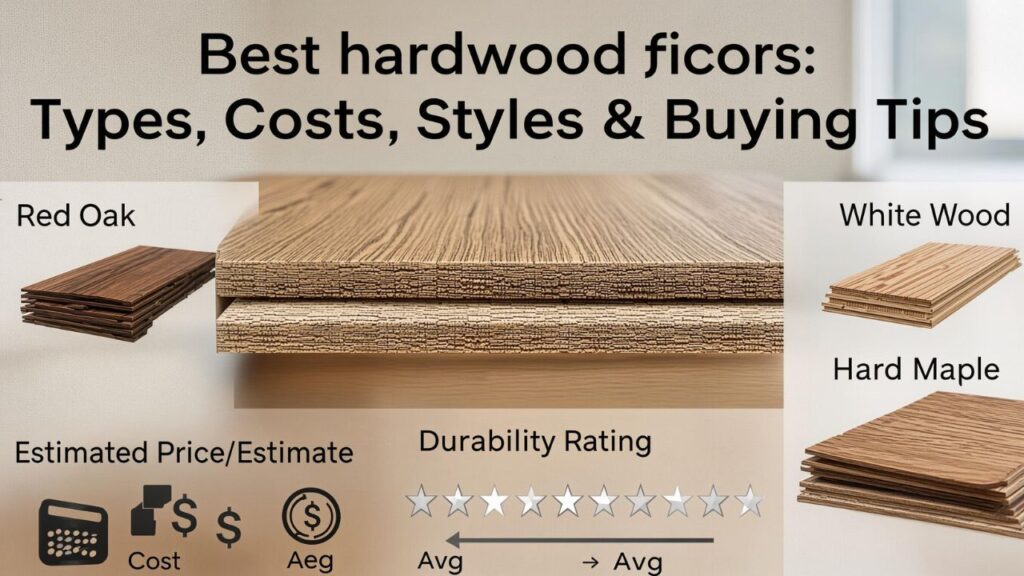
Table of Contents
- What Makes Hardwood Flooring Worth It?
- Solid vs. Engineered Hardwood Floors
- Best Hardwood Floors by Wood Species
- Durability, Janka Ratings, Pets, and Daily Life
- Colors, Plank Widths, Finishes, and Design Trends
- Installation Methods, Moisture, and Room Suitability
- Costs, Resale Value, and Financial Insights
- Personal Background, Design Journey, Achievements, and Financial Insights
- Care, Cleaning, and Long-Term Maintenance
- Common Mistakes to Avoid
- FAQs
- Conclusion
What Makes Hardwood Flooring Worth It?
Definition: Hardwood flooring is a real wood floor surface made from solid wood planks or engineered boards with a genuine hardwood veneer, installed to create a durable, refinishable, natural floor.
The appeal is simple: hardwood has character. No two boards are exactly alike. Grain, knots, mineral streaks, color shifts, and natural variation give it a depth that printed flooring can imitate but not fully duplicate.
A good wood floor also ages differently than many other surfaces. Scratches can become part of the story, or they can be sanded and refinished. The National Wood Flooring Association says properly maintained wood floors can last for generations and can be renewed through recoating when they start to look dull.
That long-term value is one reason homeowners keep coming back to hardwood even when vinyl, laminate, tile, and engineered alternatives compete for attention.
Hardwood Is Beautiful, But Not Perfect
Hardwood is not magic. It can dent, scratch, fade, gap, cup, stain, or react badly to water. If you expect it to behave like porcelain tile, you may be disappointed.
However, if you understand that wood is a natural material, it becomes easier to love. It expands and contracts. It changes color in sunlight. It rewards care. It dislikes standing water. It needs the right cleaning routine.
The real goal is not to find an indestructible floor. The goal is to find the right hardwood for your home, climate, budget, and lifestyle.
Why People Still Prefer Hardwood
People choose hardwood because it offers:
- Natural warmth and texture
- Strong resale appeal
- Long service life
- Refinishability
- Design flexibility
- Better aging than many trend-based surfaces
- A premium feel underfoot
- Compatibility with rugs, furniture, and changing décor
That last point matters more than people think. A sofa may change. Wall colors may change. Hardware trends may change. A good wood floor can adapt through all of it.
Solid vs. Engineered Hardwood Floors
Before choosing species or color, decide whether solid or engineered hardwood makes more sense.
Solid hardwood is made from one piece of wood from top to bottom. It can usually be sanded and refinished multiple times, depending on thickness and condition. It is often nailed to a wood subfloor and works best in areas with stable moisture.
Engineered hardwood has a real wood wear layer on top of a layered plywood or composite core. It usually handles dimensional movement better than solid wood, which can make it useful in certain kitchens, basements, concrete slabs, condos, and humidity-prone spaces.
Solid Hardwood
Solid hardwood feels traditional and substantial. Many older homes have solid oak, maple, heart pine, or walnut floors that have survived decades because they can be refinished.
Best uses:
- Living rooms
- Dining rooms
- Bedrooms
- Hallways
- Above-grade spaces
- Homes with wood subfloors
Watch out for: - Moisture-sensitive areas
- Basements
- Slab installations without proper systems
- Wide humidity swings
- Higher installation demands
Solid wood is wonderful when conditions are right. It is less forgiving when moisture is ignored.
Engineered Hardwood
Engineered hardwood is not fake wood when the top layer is real hardwood. It simply uses a different construction.
Best uses:
- Kitchens
- Finished basements, if product-approved
- Condos
- Concrete slab homes
- Wider planks
- Areas with more humidity variation
Watch out for: - Thin wear layers that limit refinishing
- Low-quality cores
- Unclear warranties
- Poor locking systems
- Products that cannot be sanded
HomeAdvisor lists installed engineered hardwood flooring at about $7 to $20 per square foot, with costs depending on room size and product choice.
Which One Is Better?
Neither is automatically better. Solid hardwood is best when you want maximum refinishing potential and have a suitable environment. Engineered hardwood is often better when you need more stability or want wide planks over a slab or in a slightly more challenging space.
The smartest choice is the one that matches the room, not the showroom fantasy.
Best Hardwood Floors by Wood Species
The best hardwood floors are usually chosen by balancing beauty, hardness, price, availability, and lifestyle. A dramatic walnut floor may look stunning, but a busy family with large dogs may prefer something harder. A pale maple floor may feel clean, but it can show certain marks more easily than a more grained oak.
Oak Flooring
Oak is the safe classic for a reason. It is durable, widely available, easy to stain, and familiar to buyers.
White oak has become especially popular because it has a calm grain, neutral undertone, and modern warmth. Red oak is often more affordable and has a warmer, pinker cast.
Best for:
- Whole-house flooring
- Traditional homes
- Modern organic interiors
- Families wanting durability and flexibility
- Stained or natural finishes
Oak is a strong choice when you want a floor that feels timeless rather than trendy.
Maple Flooring
Maple has a smoother, cleaner grain than oak. It can make a room feel bright and contemporary.
Best for:
- Modern homes
- Light interiors
- Minimalist spaces
- Bedrooms and living areas
Watch out for stain behavior. Maple can be harder to stain evenly, so it often looks best in natural or lightly tinted finishes.
Hickory Flooring
Hickory is one of the hardest common domestic flooring woods. It has strong grain variation and a bold, rustic-modern personality.
Best for:
- Busy households
- Pets
- Rustic, farmhouse, cabin, or casual homes
- Homeowners who like visible grain
The strong contrast between boards is beautiful to some people and too busy for others. Always view a larger sample.
Walnut Flooring
Walnut is rich, dark, and elegant. It brings instant drama, especially in libraries, dining rooms, bedrooms, and luxury interiors.
Best for:
- Formal spaces
- Luxury design
- Homes with good natural light
- Warm, moody interiors
Watch out for softness compared with harder domestic species. Walnut can dent more easily than oak or hickory.
Ash, Birch, Cherry, and Exotic Woods
Ash can look similar to oak with a lighter, lively grain. Birch can be affordable but varies in hardness and appearance. Cherry darkens beautifully over time but is softer. Exotic species can be very hard and dramatic, though sourcing, cost, sustainability, and color stability should be considered carefully.
| Species | General Look | Durability Feel | Best Style Match |
|---|---|---|---|
| White oak | Neutral, calm grain | Strong everyday choice | Modern, transitional, classic |
| Red oak | Warm, visible grain | Strong everyday choice | Traditional, budget-conscious remodels |
| Maple | Smooth, pale, clean | Hard but can show marks | Modern, Scandinavian, minimalist |
| Hickory | Bold, varied grain | Very hard | Rustic, farmhouse, busy homes |
| Walnut | Dark, rich, elegant | Softer than oak/hickory | Luxury, formal, moody interiors |
| Ash | Light, active grain | Generally durable | Casual, modern, natural interiors |
Durability, Janka Ratings, Pets, and Daily Life
Durability is not only about hardness. It is also about finish quality, sheen, color, grain, maintenance, and household habits.
The Janka hardness scale helps compare species. The NWFA explains that Janka testing measures the pound-force required to push a 0.444-inch steel ball halfway into wood, giving an indication of how well a species resists dents and dings.
Hardness Helps, But It Is Not Everything
A harder wood resists dents better, but it can still scratch. Scratches often affect the finish more than the wood itself. That is why finish type matters so much.
A floor with a strong factory finish may outperform a softer-looking site finish in some busy homes. On the other hand, a site-finished floor may offer a smoother, more seamless look because finish is applied after installation.
Pets and Hardwood Floors
Pets do not automatically rule out hardwood, but they change the decision.
Better pet-friendly choices include:
- Oak
- Hickory
- Hard maple
- Matte or satin finishes
- Brushed or wire-brushed textures
- Medium tones
- Engineered products with strong finish systems
Avoid very glossy, very dark floors if scratches make you anxious. Dark glossy floors can show dust, paw marks, and scratches quickly.
Kids, Shoes, and Real Life
If your home has children, guests, rolling chairs, toys, sports gear, and sandy shoes, choose forgiveness over perfection.
Forgiving floors usually have:
- Visible grain
- Medium color
- Matte finish
- Slight texture
- Strong protective coating
- Sensible plank width
A floor that hides life a little will make you happier than one that demands constant apology.
Colors, Plank Widths, Finishes, and Design Trends
Color is emotional. People often fall in love with a floor sample under showroom lights, then feel shocked when it looks different at home.
Light, midtone, and warmer wood floors have been especially visible in recent design coverage. Houzz’s 2025 flooring trend report says lighter-tone and midtone hardwood and wood-look products continue to dominate, with warmer hues replacing the cooler driftwood gray planks that were popular for years.
Light Hardwood Floors
Light floors make rooms feel open and airy. White oak, ash, maple, and pale engineered products work well in modern, Scandinavian, coastal, Japandi, and organic interiors.
Pros:
- Brightens rooms
- Hides dust better than dark floors
- Feels current and flexible
- Pairs well with white, cream, black, green, and wood tones
Watch out for: - Yellowing finishes
- Too-pale floors that feel washed out
- Dirt in heavy-use entries
Medium Hardwood Floors
Medium brown floors are often the most forgiving. They feel warm without being too dark and work with traditional and modern interiors.
Pros:
- Timeless
- Good resale appeal
- Hides dust and wear better than extremes
- Works with many cabinet colors
Medium tones are often the safest choice for homeowners who want warmth without chasing trends.
Dark Hardwood Floors
Dark floors can be stunning. They bring elegance, contrast, and drama.
Pros:
- Luxurious look
- Beautiful with white walls and light rugs
- Strong design impact
Watch out for: - Dust visibility
- Pet hair visibility
- Scratches
- Rooms feeling smaller
Dark floors need enough light and a realistic maintenance mindset.
Plank Width
Wide planks feel modern and calm because fewer seams break up the floor. Narrow planks feel classic and can suit older homes beautifully.
| Plank Width | Feeling | Best For |
|---|---|---|
| 2¼ inches | Traditional | Historic homes, classic oak floors |
| 3–4 inches | Balanced | Most homes, flexible styling |
| 5–7 inches | Modern and spacious | Open plans, contemporary interiors |
| 8 inches and wider | Luxury, rustic, dramatic | Large rooms, premium designs |
| Wider planks may show movement more visibly, so engineered construction is often used for stability. |
Finish Sheen
Matte and satin finishes are popular because they feel natural and hide everyday wear better than glossy finishes. High-gloss floors can look formal, but they show scratches, dust, and footprints more easily.
If you want the floor to feel current and livable, satin or matte is usually the safer choice.
Installation Methods, Moisture, and Room Suitability
Installation is where many flooring projects succeed or fail. Even beautiful material can perform poorly if it is installed over the wrong subfloor, with bad moisture conditions, or without proper acclimation.
Hardwood reacts to moisture. It can expand, contract, cup, crown, gap, or buckle when conditions are wrong. That is why site evaluation matters before installation.
Common Installation Methods
| Method | Best For | Notes |
|---|---|---|
| Nail-down | Solid hardwood over wood subfloor | Traditional and durable |
| Glue-down | Engineered wood, slabs, some solid products | Adhesive and moisture prep matter |
| Floating | Some engineered click-lock floors | Faster installation, may sound different |
| Staple-down | Certain wood floors over wood subfloor | Product-specific |
| Always follow manufacturer instructions. The right method depends on board construction, subfloor type, moisture readings, and room location. |
Best Rooms for Hardwood
Great rooms for hardwood:
- Living rooms
- Dining rooms
- Bedrooms
- Hallways
- Home offices
- Staircases
- Family rooms
Use caution in: - Kitchens
- Laundry rooms
- Mudrooms
- Basements
- Powder rooms
- Homes with frequent water exposure
Avoid or be very careful in: - Full bathrooms
- Wet basements
- Rooms with chronic leaks
Hardwood in kitchens can be beautiful, but it needs quick spill cleanup, good mats near sinks, and a household that respects water.
Indoor Air and Product Labels
If choosing engineered hardwood, ask about low-emission certifications and compliance. The EPA states that after March 22, 2019, regulated composite wood products sold in the U.S. must be labeled TSCA Title VI compliant; these products include hardwood plywood, MDF, particleboard, and finished goods containing them.
That does not mean engineered hardwood is unsafe. It means buyers should ask clear questions about product compliance, adhesives, finishes, and indoor-air certifications.
Costs, Resale Value, and Financial Insights
Hardwood can be a significant investment, but it is also one of the few flooring choices that many buyers actively notice.
HomeAdvisor’s 2025 flooring data gives hardwood installation a broad range of about $4 to $29 per square foot depending on type and project conditions, while its wood-floor installation guide commonly cites $6 to $25 per square foot for hardwood materials and installation.
What Affects Cost?
Costs rise or fall based on:
- Wood species
- Solid vs. engineered construction
- Plank width
- Grade and character variation
- Finish type
- Subfloor condition
- Demolition and disposal
- Stairs
- Pattern installation
- Moisture mitigation
- Labor rates
- Furniture moving
- Trim and transitions
A straight installation of standard oak in a simple room is very different from wide-plank walnut, herringbone patterning, stair treads, and custom vents.
Resale Value
The National Association of Realtors’ 2022 Remodeling Impact Report found that refinishing hardwood floors had a 147% cost recovery and new wood flooring had a 118% cost recovery among interior projects in that report.
Those numbers do not guarantee the same return in every market or every year. But they do show why wood floors are often considered a strong interior investment.
Budget-Friendly Ways to Get the Look
If new hardwood is too expensive, consider:
- Refinishing existing hardwood
- Recoating instead of sanding
- Using hardwood in main living areas only
- Choosing red oak instead of premium species
- Selecting narrower standard planks
- Using engineered hardwood strategically
- Comparing factory-finished and site-finished options
Sometimes the smartest floor is not the most expensive floor. It is the one that gives the right balance of beauty, durability, and budget.
Personal Background, Design Journey, Achievements, and Financial Insights
Because this topic is a flooring category rather than a public person, personal background and net worth do not apply in a literal biographical sense. There is no single founder, celebrity profile, or personal wealth figure attached to hardwood flooring as a concept.
What does apply is the design journey of wood floors. Hardwood began as a practical building material, became a sign of craftsmanship, and later turned into one of the most desired surfaces in residential design. Older homes often used narrow oak, pine, maple, or other local species. Modern homes may use wide engineered white oak, reclaimed wood, herringbone patterns, or matte natural finishes.
The achievement of the best hardwood floors is that they bridge function and feeling. They carry furniture, footsteps, pets, parties, and quiet mornings, yet still bring natural beauty into the home.
The “Career Journey” of Hardwood Flooring
Hardwood flooring has evolved through several stages:
- Local plank flooring in early homes
- Narrow strip oak floors in traditional houses
- Parquet and patterned flooring
- Glossy formal finishes
- Prefinished factory-coated planks
- Engineered wide-plank flooring
- Matte, natural, warm, and textured finishes
Today’s strongest hardwood looks are often less shiny and more honest. They celebrate grain, warmth, and natural variation.
Financial Insights
From a financial perspective, hardwood works best when treated as a long-term surface, not a disposable trend. Spend on proper installation, suitable species, finish quality, and moisture control before spending extra on dramatic colors or complicated patterns.
A well-chosen oak floor may outlast several cycles of paint colors, furniture styles, and kitchen hardware trends. That is where the value lives.
Care, Cleaning, and Long-Term Maintenance
A hardwood floor does not need to be babied, but it does need respectful habits.
The NWFA recommends maintenance practices such as regular cleaning, using correct wood-floor cleaners, protecting floors from scratches and moisture, and recoating when floors begin to look dull.
Daily and Weekly Care
Good habits include:
- Sweep or dust mop regularly.
- Wipe spills quickly.
- Use floor protectors under furniture.
- Place mats at entries.
- Avoid wet mopping.
- Keep pet nails trimmed.
- Use rugs in high-traffic areas.
- Follow the finish manufacturer’s cleaner recommendations.
Avoid steam mops unless the floor manufacturer specifically allows them. Too much moisture and heat can harm wood floors.
Recoating vs. Refinishing
Recoating means adding a new layer of finish without fully sanding down to bare wood. It can refresh a worn finish before deeper damage occurs.
Refinishing means sanding the floor and applying new stain or finish. It is more intensive but can dramatically restore tired floors.
Solid hardwood can often be refinished multiple times. Engineered hardwood depends on the thickness of the wear layer.
Humidity Matters
Wood floors behave best in stable indoor conditions. Extreme dryness can cause gaps. Excess moisture can cause swelling or cupping.
In dry winters, a humidifier may help. In humid climates, air conditioning and dehumidification can protect the floor. This is not glamorous advice, but it matters.
Common Mistakes to Avoid
The first mistake is choosing color before thinking about lifestyle. A dark glossy floor may look stunning in a showroom, but it may drive you crazy with pets, dust, or bright sunlight.
The second mistake is ignoring moisture. Moisture problems do not care how expensive the flooring was.
The third mistake is choosing the cheapest installer. Wood flooring is not just a product. It is a system of subfloor preparation, moisture testing, layout, fastening, transitions, and finishing.
The fourth mistake is assuming all engineered hardwood can be refinished. Some products have very thin wear layers.
The fifth mistake is skipping samples at home. A floor sample looks different beside your cabinets, rugs, paint, and natural light.
The sixth mistake is using the wrong cleaner. Harsh chemicals, waxes, oil soaps, and wet mops can damage finishes or create residue.
The seventh mistake is chasing trends too hard. Gray floors, ultra-dark stains, and overly rustic distressing can date faster than natural wood tones.
A Real-Life Example
Imagine a couple with two children, a golden retriever, and a sunny open-plan living room. They fall in love with a very dark, glossy walnut floor online. It looks dramatic and expensive.
Their flooring professional gently suggests a medium-toned white oak with a matte finish instead. At first, it feels less glamorous. Six months later, they are grateful. The floor hides paw marks better, brightens the room, and still feels elegant.
That is the point. Good flooring is not only about what looks best for five minutes. It is about what you can live with for years.
FAQs
What are the best hardwood floors for most homes?
White oak, red oak, maple, and hickory are among the strongest everyday choices. Oak is the most flexible, maple feels clean and modern, and hickory is excellent for busy homes that need extra dent resistance.
Is solid or engineered hardwood better?
Solid hardwood is better for maximum refinishing potential in stable above-grade spaces. Engineered hardwood is often better for wider planks, concrete slabs, and rooms where dimensional stability matters.
What hardwood floor color is most timeless?
Natural, warm, and medium wood tones tend to age well. Very gray, very orange, very dark, or very trendy stains may feel dated sooner.
What hardwood is best for dogs?
Hickory, oak, and hard maple are practical choices. Choose a matte or satin finish, visible grain, and a medium tone to help hide scratches and paw marks.
Are hardwood floors good for kitchens?
They can be, but they require care. Wipe spills quickly, use mats near sinks, avoid standing water, and choose a product approved for kitchen use. Engineered hardwood may be more stable in some kitchen conditions.
How much do hardwood floors cost?
HomeAdvisor’s 2025 guide lists hardwood installation commonly at about $6 to $25 per square foot, with total project cost depending on species, labor, square footage, demolition, subfloor condition, and installation method.
Do hardwood floors increase home value?
They can support resale appeal. NAR’s 2022 Remodeling Impact Report found strong cost recovery for refinishing hardwood floors and new wood flooring among interior projects.
What finish is best for hardwood floors?
For most homes, matte or satin finishes are practical because they hide scratches, dust, and wear better than high-gloss finishes. The best finish also depends on product type and household traffic.
Can hardwood floors last a lifetime?
Yes, they can last for generations with proper maintenance, recoating, and refinishing when needed. The NWFA notes that maintained wood floors can provide long-term value and can be renewed over time.
Conclusion
Choosing the best hardwood floors is not about finding one perfect species for everyone. It is about matching wood, construction, finish, color, installation, and maintenance to the way your home actually works.
For many homeowners, white oak or red oak offers the best balance of beauty, durability, availability, and resale appeal. For busy households, hickory or textured oak may be smarter. For refined, dramatic spaces, walnut can be gorgeous. For moisture-sensitive areas, engineered hardwood may be the safer route.
Take samples home. Look at them in real light. Ask about Janka hardness, wear layers, finish warranties, installation method, moisture testing, and maintenance. Think about pets, shoes, sunlight, spills, and how much imperfection you can comfortably accept.
A great hardwood floor does not just cover a room. It gives the home warmth, rhythm, history, and a surface that can grow more beautiful with time.