Introduction
Have you ever walked into a room and instantly felt calm, energized, inspired, or even nostalgic without fully understanding why? That emotional response often comes down to design. The colors, textures, furniture, lighting, and layout all work together to shape how a space feels. That’s exactly why learning about types of interior design styles matters so much today.
Homes are no longer viewed as simple places to eat and sleep. They’ve become personal sanctuaries, remote offices, entertainment spaces, and emotional comfort zones. In reality, the way your home looks can influence your mood, productivity, creativity, and even relationships.
The challenge, however, is that modern homeowners are overwhelmed with inspiration. Social media platforms are filled with stunning interiors, yet many people still struggle to define what they actually like. Some love the clean simplicity of Scandinavian spaces, while others are drawn toward warm rustic textures or bold eclectic rooms full of personality.
Understanding different interior aesthetics helps simplify those decisions. Instead of copying random trends, you begin creating spaces that genuinely fit your lifestyle and emotional preferences.

Table of Contents
Understanding Interior Design Styles
Why Interior Design Matters More Than Ever
Modern Interior Design Style
Contemporary Interior Design
Minimalist Interior Style
Scandinavian Interior Design
Traditional Interior Design
Industrial Interior Style
Rustic Interior Design
Farmhouse Interior Design
Bohemian Interior Design
Mid-Century Modern Style
Coastal Interior Design
Luxury and Glam Interiors
Japandi Interior Style
Eclectic Interior Design
How to Choose the Right Interior Style
Common Interior Design Mistakes
Personal Journey Behind Modern Interior Trends
Frequently Asked Questions
Conclusion
Understanding Interior Design Styles
Interior design styles are structured visual themes that combine furniture, layouts, materials, lighting, colors, and décor into a cohesive aesthetic. Each style creates a different emotional atmosphere and reflects distinct cultural or historical influences.
Some styles focus on elegance and tradition, while others prioritize simplicity, comfort, or creativity. However, the best interiors almost always balance beauty with functionality.
A recent home improvement survey found that over 74% of homeowners believe interior design significantly affects their mental well-being. That statistic highlights how deeply our environments shape daily experiences.
Learning about different styles helps homeowners:
- Create cohesive interiors
- Avoid expensive decorating mistakes
- Improve room functionality
- Increase comfort
- Reflect personal identity
More importantly, understanding design styles helps people stop chasing trends and start building homes that feel authentic.

Why Interior Design Matters More Than Ever
Modern life is stressful. Between remote work, digital overload, and busy routines, people increasingly crave homes that feel emotionally supportive.
Different types of interior design styles affect people differently:
| Interior Style | Emotional Feeling |
|---|---|
| Scandinavian | Calm and cozy |
| Industrial | Bold and creative |
| Minimalist | Peaceful and organized |
| Traditional | Warm and elegant |
| Coastal | Relaxed and airy |
Interior design influences:
- Sleep quality
- Focus and productivity
- Social comfort
- Stress levels
- Creativity
For example, cluttered environments often increase anxiety, while balanced spaces encourage relaxation and mental clarity.
That emotional connection explains why interior design content has exploded across Pinterest, Instagram, YouTube, and lifestyle blogs over the past decade.
Modern Interior Design Style
Modern interior design emerged during the early 20th century and emphasizes simplicity, clean lines, and practical functionality.
Characteristics of Modern Interiors
Modern spaces typically include:
- Neutral color palettes
- Open layouts
- Geometric furniture
- Natural materials
- Minimal ornamentation
Glass, wood, leather, and metal are commonly used materials.
Why Modern Design Remains Popular
Modern interiors feel uncluttered and visually calming. They create a sense of openness that works especially well in urban homes and apartments.

However, purely modern spaces can sometimes feel cold. Designers often soften them with:
- Layered textiles
- Warm lighting
- Indoor plants
- Natural textures
Among all types of interior design styles, modern interiors remain one of the most timeless and adaptable choices.
Contemporary Interior Design
Contemporary design reflects current trends rather than a fixed historical movement.
Key Features
Contemporary interiors often feature:
- Neutral tones
- Curved furniture
- Statement lighting
- Smart technology integration
- Open-concept spaces
Unlike strict modernism, contemporary spaces evolve constantly.
Flexibility and Creativity
Contemporary design allows homeowners to blend:
- Minimalism
- Organic shapes
- Art-focused décor
- Luxury textures
This flexibility makes it highly appealing for younger homeowners who enjoy evolving aesthetics.

Minimalist Interior Style
Minimalism follows the idea that less truly can be more.
What Defines Minimalism?
Minimalist interiors focus on:
- Simplicity
- Intentionality
- Functional furniture
- Open visual space
Every item serves a purpose.
Psychological Benefits
Minimalist homes often reduce visual stress and mental clutter.
People frequently report feeling:
- More focused
- Less overwhelmed
- More emotionally relaxed
That said, good minimalism still feels warm and inviting rather than empty or sterile.
Scandinavian Interior Design
Scandinavian design originated in Nordic countries and became famous for combining practicality with comfort.
Core Scandinavian Elements
Scandinavian interiors commonly include:
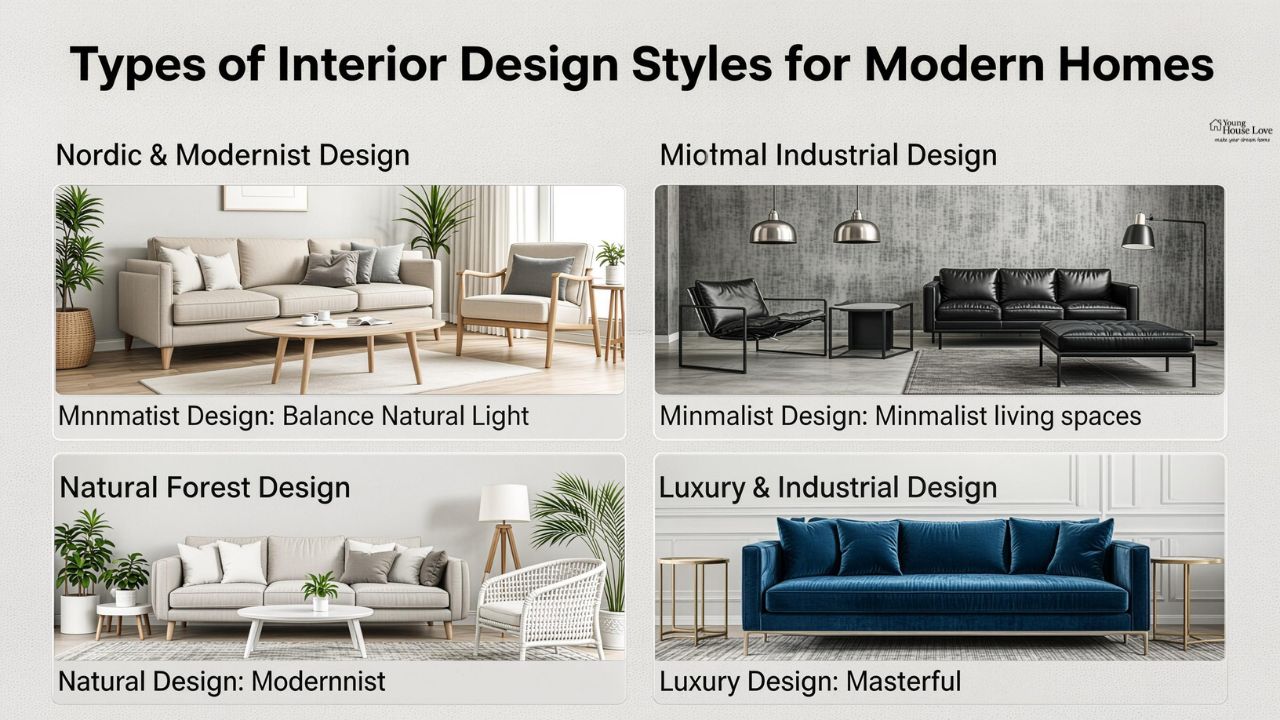
- White walls
- Natural wood
- Cozy textiles
- Soft lighting
- Functional furniture
Hygge and Emotional Warmth
A major Scandinavian concept called “hygge” emphasizes coziness and emotional comfort.
This explains why Scandinavian spaces often feel:
- Peaceful
- Welcoming
- Bright
- Relaxing
Many homeowners researching types of interior design styles discover Scandinavian interiors because they balance simplicity with warmth exceptionally well.
Traditional Interior Design
Traditional design draws heavily from classic European aesthetics.
Traditional Style Characteristics
Typical elements include:
- Ornate details
- Rich wood tones
- Elegant fabrics
- Symmetrical layouts
- Warm color palettes
Why Traditional Interiors Endure
Traditional homes often feel timeless and sophisticated.
Unlike rapidly changing trends, traditional interiors age gracefully when designed thoughtfully.
However, balance is important. Too much decoration can make rooms feel heavy or outdated.

Industrial Interior Style
Industrial design originated from converted warehouses and factories.
Signature Industrial Features
Industrial spaces typically showcase:
- Exposed brick
- Concrete surfaces
- Metal finishes
- Open ceilings
- Vintage-inspired lighting
Balancing Industrial Design
Without warmth, industrial rooms may feel harsh.
Designers usually soften them with:
- Leather seating
- Wood accents
- Area rugs
- Warm lighting
- Green plants
Industrial spaces remain one of the boldest types of interior design styles for creative personalities and urban living.
Rustic Interior Design
Rustic interiors celebrate natural materials and earthy textures.
Rustic Design Elements
Common rustic features include:
- Exposed wood beams
- Stone fireplaces
- Handmade décor
- Warm earthy colors
- Vintage-inspired furniture
Emotional Comfort
Rustic interiors feel grounded and emotionally comforting.
They often remind people of countryside cabins, family gatherings, and simpler lifestyles.
Farmhouse Interior Design
Farmhouse style combines practicality with cozy charm.
Key Farmhouse Features
Farmhouse spaces usually include:
- Shiplap walls
- Neutral colors
- Barn-style details
- Large dining tables
- Vintage accessories
Why Farmhouse Became So Popular
Television renovation shows helped popularize farmhouse aesthetics dramatically.
Families often love farmhouse interiors because they feel:
- Relaxed
- Functional
- Warm
- Inviting
Bohemian Interior Design
Bohemian interiors celebrate creativity, individuality, and layered storytelling.
What Makes Boho Unique?
Bohemian spaces feature:
- Layered textiles
- Global influences
- Vintage finds
- Plants
- Rich colors and patterns
Personal Expression
Unlike highly structured styles, bohemian interiors embrace imperfection and personality.
Among all types of interior design styles, bohemian décor often feels the most artistic and emotionally expressive.
Mid-Century Modern Style
Mid-century modern design became popular during the 1950s and 1960s.
Signature Features
This style often includes:
- Tapered furniture legs
- Organic curves
- Retro palettes
- Functional layouts
- Minimal ornamentation
Lasting Appeal
Mid-century modern furniture remains incredibly popular because it blends elegance with practicality.
Many pieces still look contemporary decades later.
Coastal Interior Design
Coastal interiors are inspired by relaxed seaside living.
Coastal Design Elements
Common features include:
- Soft blues and whites
- Natural textures
- Airy layouts
- Linen fabrics
- Large windows
Emotional Atmosphere
Coastal interiors feel calm, breezy, and refreshing.
Interestingly, homeowners don’t need beach houses to use coastal aesthetics successfully.
Luxury and Glam Interiors
Luxury interiors focus on elegance, exclusivity, and visual impact.
Common Glam Features
Luxury spaces often include:
- Marble surfaces
- Velvet fabrics
- Crystal lighting
- Metallic finishes
- Statement mirrors
Emotional Impact
Luxury interiors are designed to feel:
- Sophisticated
- Dramatic
- Confident
- Elevated
However, restraint matters. Too much glamour can quickly become visually exhausting.
Japandi Interior Style
Japandi combines Japanese minimalism with Scandinavian comfort.
Why Japandi Is Trending
This hybrid aesthetic emphasizes:
- Simplicity
- Craftsmanship
- Natural materials
- Calmness
- Functionality
Japandi Design Elements
Typical Japandi interiors include:
- Earthy tones
- Light woods
- Handmade ceramics
- Minimal clutter
- Organic textures
Many designers consider Japandi one of the most influential modern types of interior design styles because it aligns with mindful living trends.
Eclectic Interior Design
Eclectic design mixes multiple aesthetics into one curated environment.
What Makes Eclectic Design Work?
Successful eclectic interiors balance:
- Patterns
- Colors
- Furniture eras
- Textures
- Cultural influences
Avoiding Chaos
Eclectic interiors require careful editing.
Without cohesion, rooms can feel cluttered instead of artistic.
However, well-designed eclectic spaces often feel deeply personal and memorable.
How to Choose the Right Interior Style
Choosing a design direction becomes easier when you focus on lifestyle instead of trends.
Ask Yourself Important Questions
Consider:
- Do you prefer calm or energetic spaces?
- Do you entertain often?
- Do you value simplicity or decoration?
- Do you have children or pets?
- How much maintenance can you realistically manage?
Save Inspiration Carefully
When saving design photos, notice patterns:
- Repeated colors
- Furniture shapes
- Lighting styles
- Material preferences
Over time, your true preferences become obvious.
Start Small
You don’t need to redesign your entire home immediately.
Begin with:
- Paint
- Lighting
- Rugs
- Textiles
- Decorative accents
Small changes often create dramatic emotional impact.
Common Interior Design Mistakes
Even expensive homes can feel uncomfortable when design fundamentals are ignored.
Following Trends Blindly
Trendy interiors may look outdated quickly.
Designing around personal comfort usually creates longer-lasting satisfaction.
Poor Lighting Choices
Lighting dramatically affects atmosphere.
Good interiors layer:
- Ambient lighting
- Task lighting
- Accent lighting
- Natural light
Ignoring Scale and Proportion
Furniture should fit the room appropriately.
Oversized furniture overwhelms small rooms, while tiny pieces disappear in large spaces.
Overcrowding Rooms
Too much furniture reduces both comfort and visual clarity.
Understanding the principles behind types of interior design styles helps homeowners avoid these common decorating mistakes.
Personal Journey Behind Modern Interior Trends
Interior design trends evolve alongside broader lifestyle and cultural shifts.
Decades ago, homes focused heavily on formal entertaining spaces. Today, homeowners prioritize:
- Comfort
- Flexibility
- Wellness
- Sustainability
- Work-from-home functionality
Social media platforms dramatically accelerated the growth of interior design culture.
Career Paths in Interior Design
Many professional designers begin through:
- Architecture studies
- Art backgrounds
- Home renovation projects
- Furniture design
- Visual merchandising
As platforms like Instagram and Pinterest grew, talented designers built massive online audiences.
Financial Success in the Industry
The global interior design market generates billions annually.
Successful designers often earn revenue through:
- Client consultations
- Brand partnerships
- Product collaborations
- Television appearances
- Online courses
- Furniture collections
Some celebrity interior designers now have estimated net worths in the millions due to expanding media influence.
The growing fascination with types of interior design styles continues driving demand for both professional design services and online inspiration content worldwide.
Frequently Asked Questions
What are the most popular types of interior design styles?
Modern, Scandinavian, minimalist, contemporary, farmhouse, and bohemian styles remain among the most popular today.
Which interior style is best for small apartments?
Minimalist and Scandinavian interiors work especially well because they emphasize openness, light, and functionality.
Can I combine different interior styles?
Yes. Mixing styles often creates more personalized and visually interesting spaces when done thoughtfully.
What is the difference between modern and contemporary design?
Modern design refers to a historical design movement, while contemporary style reflects current evolving trends.
Is minimalist design expensive?
Not necessarily. Minimalism often focuses more on thoughtful choices and reduced clutter rather than expensive décor.
Which interior style feels the coziest?
Scandinavian, farmhouse, and rustic interiors are commonly considered the warmest and most comforting.
How do I discover my personal design style?
Look for recurring patterns in spaces you love, including colors, textures, lighting, and furniture styles.
Are interior design trends worth following?
Trends can inspire ideas, but the best homes reflect personal comfort and long-term functionality rather than temporary popularity.
Why are neutral colors so common in modern interiors?
Neutral palettes create flexibility, visual calmness, and timeless appeal while allowing textures and furniture to stand out naturally.
Conclusion
A thoughtfully designed home does much more than impress visitors. It shapes your mood, supports your routines, influences your stress levels, and quietly affects everyday happiness in ways most people don’t fully notice until they experience the difference themselves.
That’s why exploring different types of interior design styles is so valuable. It helps you move beyond random trends and begin creating spaces that genuinely reflect your personality, habits, and emotional needs.
Some people feel most relaxed in calm Scandinavian interiors filled with natural light, while others thrive in expressive bohemian rooms layered with texture and color. There’s no universally perfect aesthetic. The best interior design style is simply the one that makes you feel most comfortable, inspired, and at home every single day.