
Introduction
Grout stains have a way of sneaking up on you. One day your tiles look bright and clean, and the next, those thin lines in between start turning dark, patchy, and stubborn. It’s frustrating—especially when you’ve already cleaned your floors or bathroom and they still don’t look fresh.
The truth is, grout stains aren’t just about appearance. They can signal trapped dirt, mold, or bacteria that regular cleaning misses. That’s why understanding how to deal with them properly can make a huge difference—not just in how your home looks, but also in how clean it actually is.
If you’ve ever wondered why grout gets stained so easily or how to restore it without damaging your tiles, you’re in the right place. This guide walks you through everything in a simple, practical way.
Understanding Grout and Why It Stains
Grout is a porous material used to fill gaps between tiles. Because of its texture, it easily absorbs liquids, dirt, and oils.
What Makes Grout So Vulnerable?
- Porosity: Grout absorbs moisture quickly
- Light color: Most grout is light, making stains more visible
- Frequent exposure: Kitchens and bathrooms constantly expose grout to water and dirt
Common Causes of Discoloration
- Soap residue buildup
- Mold and mildew growth
- Food spills and grease
- Hard water deposits
- Dirt tracked from shoes

Even regular mopping can make things worse if dirty water seeps into the grout instead of cleaning it.
Types of Grout Stains You Might Encounter
Not all stains are the same, and knowing the type helps you choose the right cleaning method.
1. Surface Dirt Stains
These are caused by dust and debris settling into grout lines.
2. Mold and Mildew
Usually found in bathrooms, these stains appear black, green, or dark brown.
3. Oil and Grease Stains
Common in kitchens where cooking oils splash onto tiled surfaces.
4. Hard Water Stains
White or chalky residue caused by mineral deposits.
5. Deep Embedded Stains
These are the toughest grout stains, often requiring more intensive cleaning or sealing.
Best Methods to Remove Grout Stains
Cleaning grout doesn’t have to be complicated. The key is using the right method for the type of stain.
Natural Cleaning Solutions
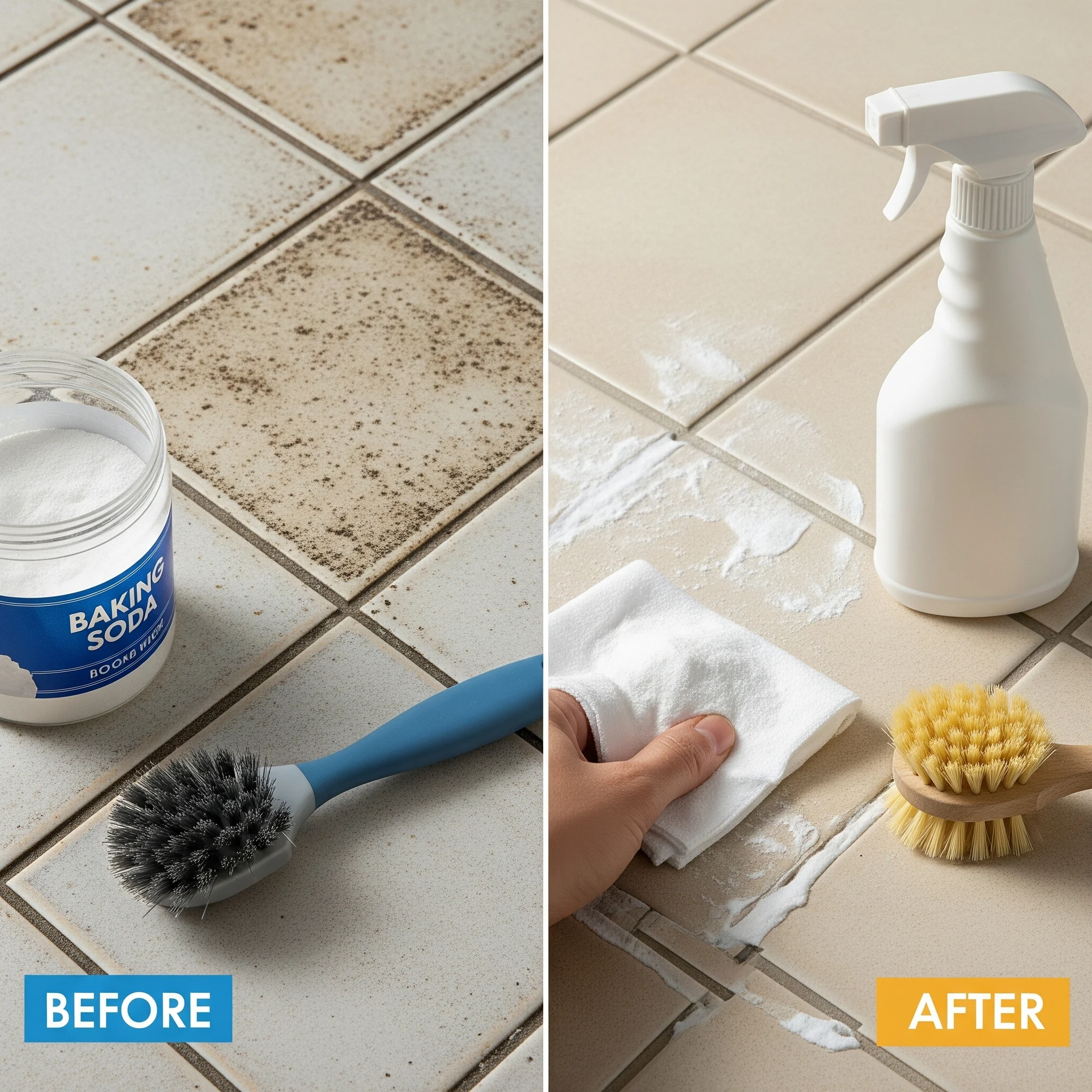
Baking Soda and Water Paste
- Mix baking soda with water to form a paste
- Apply to grout lines
- Scrub gently with a brush
Vinegar Spray
- Spray vinegar over baking soda paste
- Let it fizz and sit for a few minutes
- Scrub and rinse
⚠️ Avoid vinegar on natural stone tiles—it can cause damage. Discover Houses Beautiful for stylish home décor ideas, modern interior designs, and inspiring tips to transform your living space into a dream home.
Hydrogen Peroxide Solution
- Mix with baking soda for stronger cleaning
- Works well on tough grout stains
Commercial Grout Cleaners
These are designed specifically for deep cleaning and often deliver faster results.
Steam Cleaning
High-temperature steam can loosen dirt and kill bacteria without chemicals.
Tools That Make Grout Cleaning Easier
Using the right tools can save time and effort.
Essential Tools
- Grout brush: Narrow and stiff for precision
- Old toothbrush: Good for small areas
- Steam cleaner: Deep cleaning power
- Electric scrubber: Speeds up the process
Optional Tools
- Microfiber cloths
- Spray bottles
- Protective gloves
Preventing Grout Stains in the First Place
Prevention is always easier than deep cleaning.
Seal Your Grout
Sealing creates a protective barrier that reduces absorption.
- Apply every 6–12 months
- Especially important in bathrooms and kitchens
Clean Regularly
- Wipe tiles after use
- Avoid letting spills sit
- Use mild cleaners weekly
Improve Ventilation
Humidity encourages mold growth.
- Use exhaust fans
- Open windows when possible
Quick Daily Habits
- Dry shower walls after use
- Clean spills immediately
- Avoid harsh chemicals that degrade grout
DIY vs Professional Grout Cleaning
Sometimes DIY methods work perfectly. Other times, you might need expert help.
When DIY Works Best
- Light to moderate stains
- Recently formed discoloration
- Regular maintenance cleaning
When to Call Professionals
- Deep, stubborn grout stains
- Large tiled areas
- Mold that keeps returning
Professionals use industrial tools and sealants that last longer.
Common Mistakes to Avoid
Cleaning grout seems simple, but small mistakes can make things worse.
Overusing Water
Too much water can seep into grout and cause further staining.
Using Harsh Chemicals
Bleach and strong acids can weaken grout over time.
Scrubbing Too Hard
Aggressive scrubbing can damage grout lines.
Skipping Sealing
Unsealed grout stains much faster.
Long-Term Care for Clean Grout
Maintaining grout is about consistency, not effort.
Weekly Maintenance Routine
- Sweep or vacuum tiles
- Mop with mild cleaner
- Spot-clean grout lines
Monthly Deep Cleaning
- Use baking soda or hydrogen peroxide
- Scrub grout lines thoroughly
Annual Maintenance
- Reseal grout
- Inspect for cracks or damage
FAQ
Frequently Asked Questions
What is the fastest way to clean grout stains?
A mixture of baking soda and vinegar works quickly for most stains, especially when followed by scrubbing.
Can grout stains be permanent?
Some deep stains can be difficult to remove completely, but most can be significantly improved with proper cleaning.
Is bleach safe for grout cleaning?
Bleach can be effective but should be used sparingly, as it may weaken grout over time.
How often should grout be cleaned?
Light cleaning weekly and deep cleaning monthly is ideal.
Do grout pens really work?
Yes, grout pens can cover stains and restore color, but they don’t clean—they only mask discoloration.
What causes black grout stains?
Black stains are usually mold or mildew caused by moisture and poor ventilation.
Can I use a steam cleaner on all grout?
Yes, but ensure your tiles and grout are in good condition to avoid damage.
How long does grout sealing last?
Typically between 6 months to a year, depending on usage and exposure.
Conclusion
Grout stains might seem like a small detail, but they can completely change how your space looks and feels. Clean, bright grout makes tiles pop, while stained grout can make even a freshly cleaned room feel dull.
The good news is that with the right approach—whether it’s simple DIY methods or occasional professional help—you can restore and maintain your grout without stress. A little consistency goes a long way, and once you get into the habit, keeping your tiles looking fresh becomes much easier than you’d expect.
Take control of your grout, and you’ll notice the difference every single day.